Parapets
Tall Parapets With Worn Coping
Brick parapets with old coping let water into the wall top, and taller coping for a thicker roof changes what people see from the street.

As a Bardstown commercial roofing contractor, we replace roofs on downtown and historic district buildings, keeping visible coping, gutters, and panel color in line with review.
Downtown work changes how a Bardstown commercial roofing contractor plans a roof. Inside the historic district, the City of Bardstown requires Historic Review Board approval of exterior changes before work begins; the City Council takes up the board's decision, and a Certificate of Appropriateness arrives by mail.
Items people see from the street matter most: new standing seam panels, a different panel color, new gutters, and taller parapet coping. The building permit itself is separate and goes to Nelson County Code Enforcement.
Older downtown buildings carry roof details newer buildings lack, and these four come up on most of them.
Brick parapets with old coping let water into the wall top, and taller coping for a thicker roof changes what people see from the street.
Older storefronts drain to gutters and leaders at the front or back, and replacing them is a visible change that needs review.
Buildings reroofed many times carry stacked layers that rule out a recover and hide the deck condition underneath.
Narrow streets and shared walls leave little room for dumpsters, lifts, and material, so staging takes planning before the roof is touched.
On an older building, a new roof protects the structure and keeps its street face right.
New coping with sealed joints, sloped toward the roof, keeps water out of old brick parapets.
Tear-off removes stacked old roofs so the deck can be inspected and repaired before new insulation goes on.
Stains on upper-floor ceilings and walls stop once the parapet tops and gutters are closed.
A full replacement brings roof insulation up to Kentucky's commercial energy code for the building.
Sidewalk photos, color samples, and edge profiles prepared for the review board keep the schedule moving.
Historic review and the Nelson County building permit are tracked side by side so neither holds up the other.
Three services cover most downtown roofs.
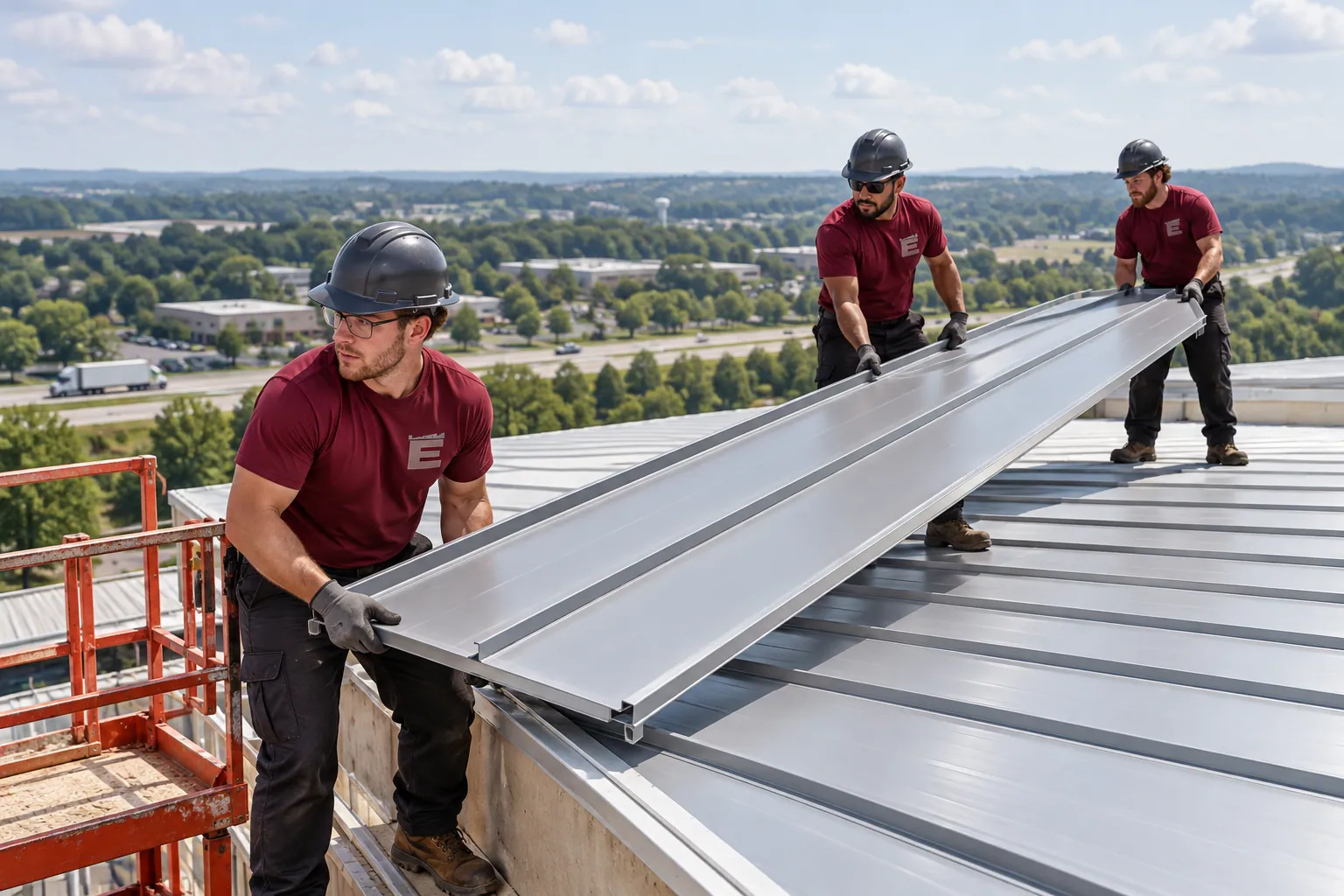
Standing seam panels on pitched or retrofit sections, with color and profile matched to what the review board approves.
Commercial metal roofing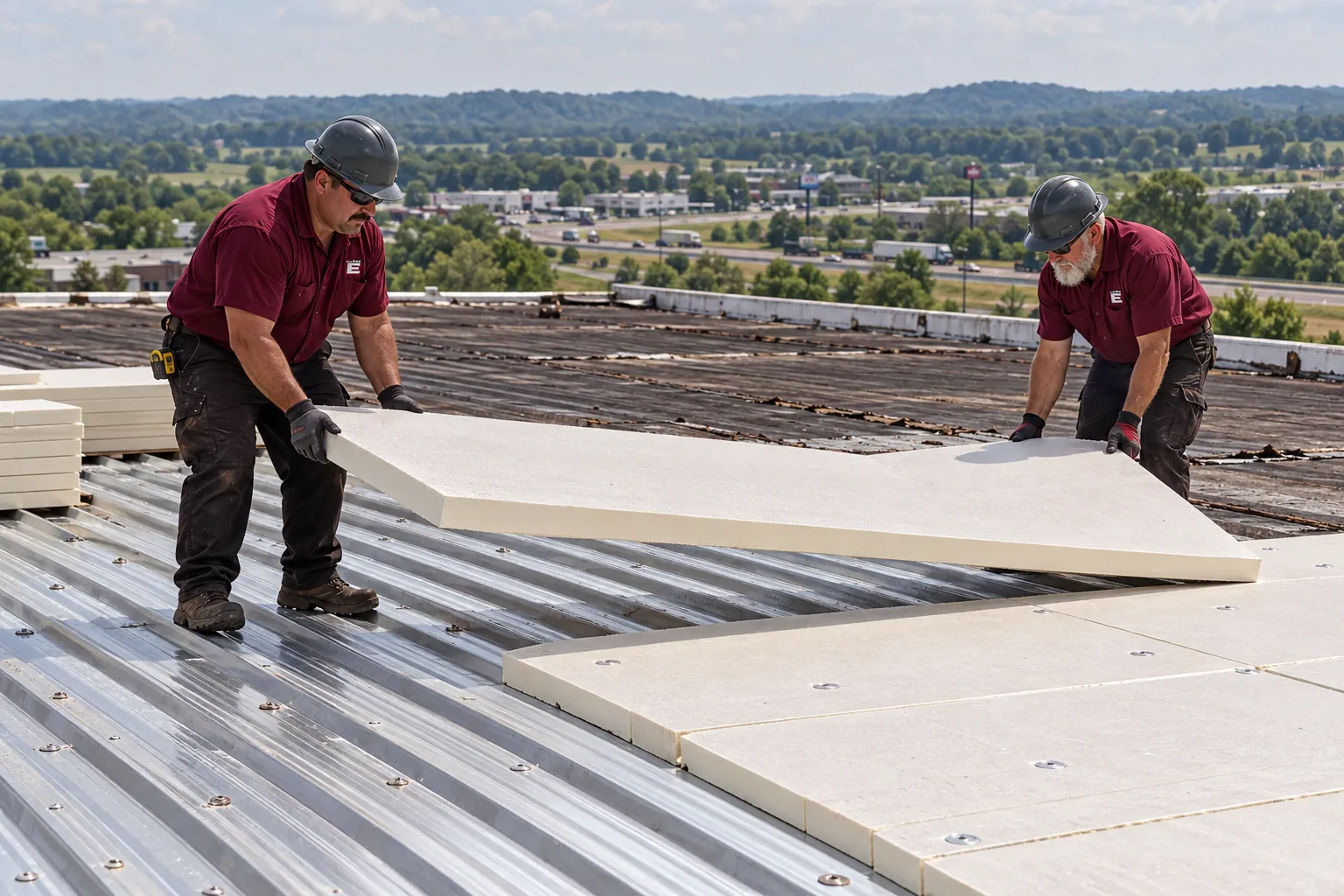
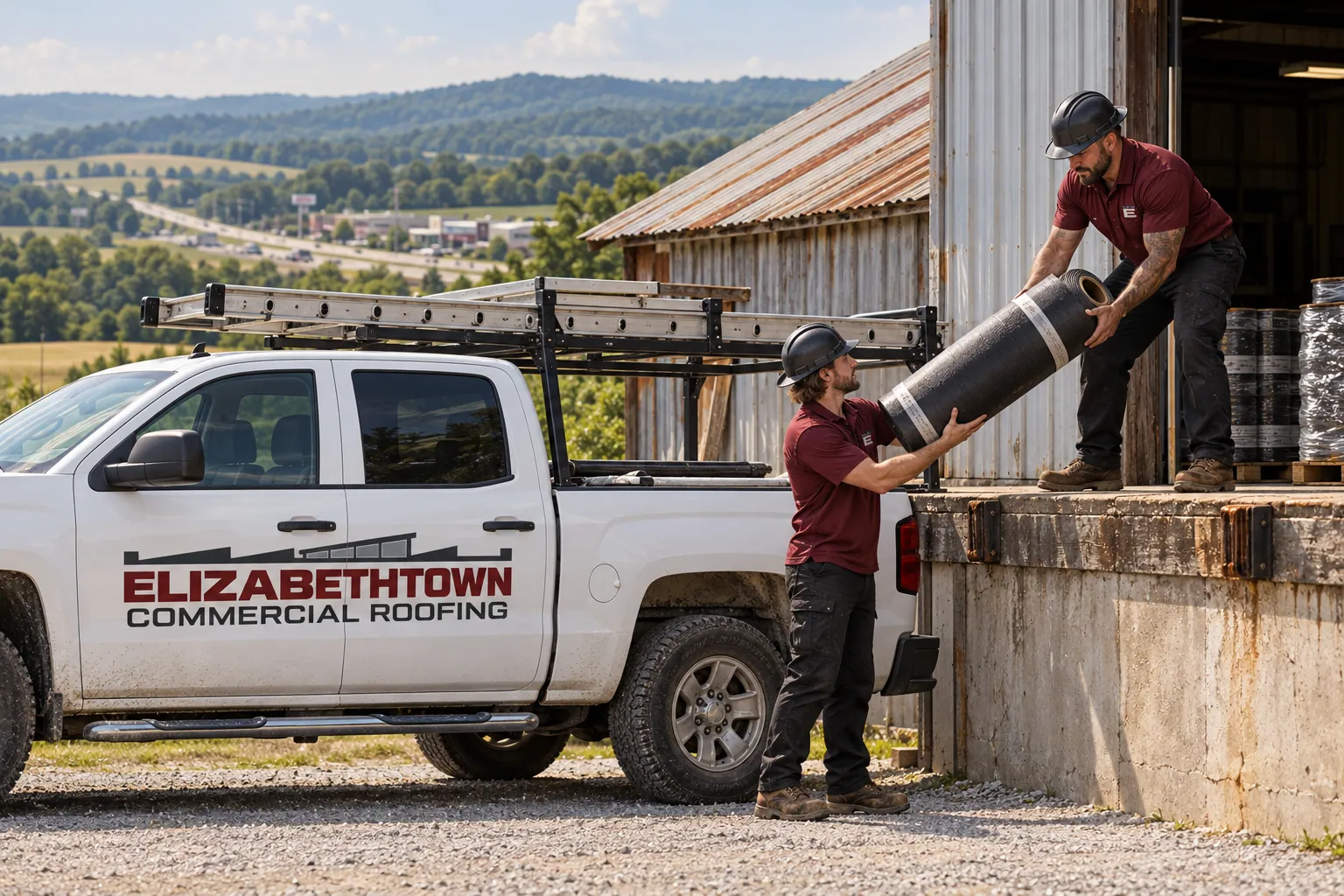
Tear-off and new membrane on flat downtown roofs, with tapered boards and coping reset to the new height.
Flat roofing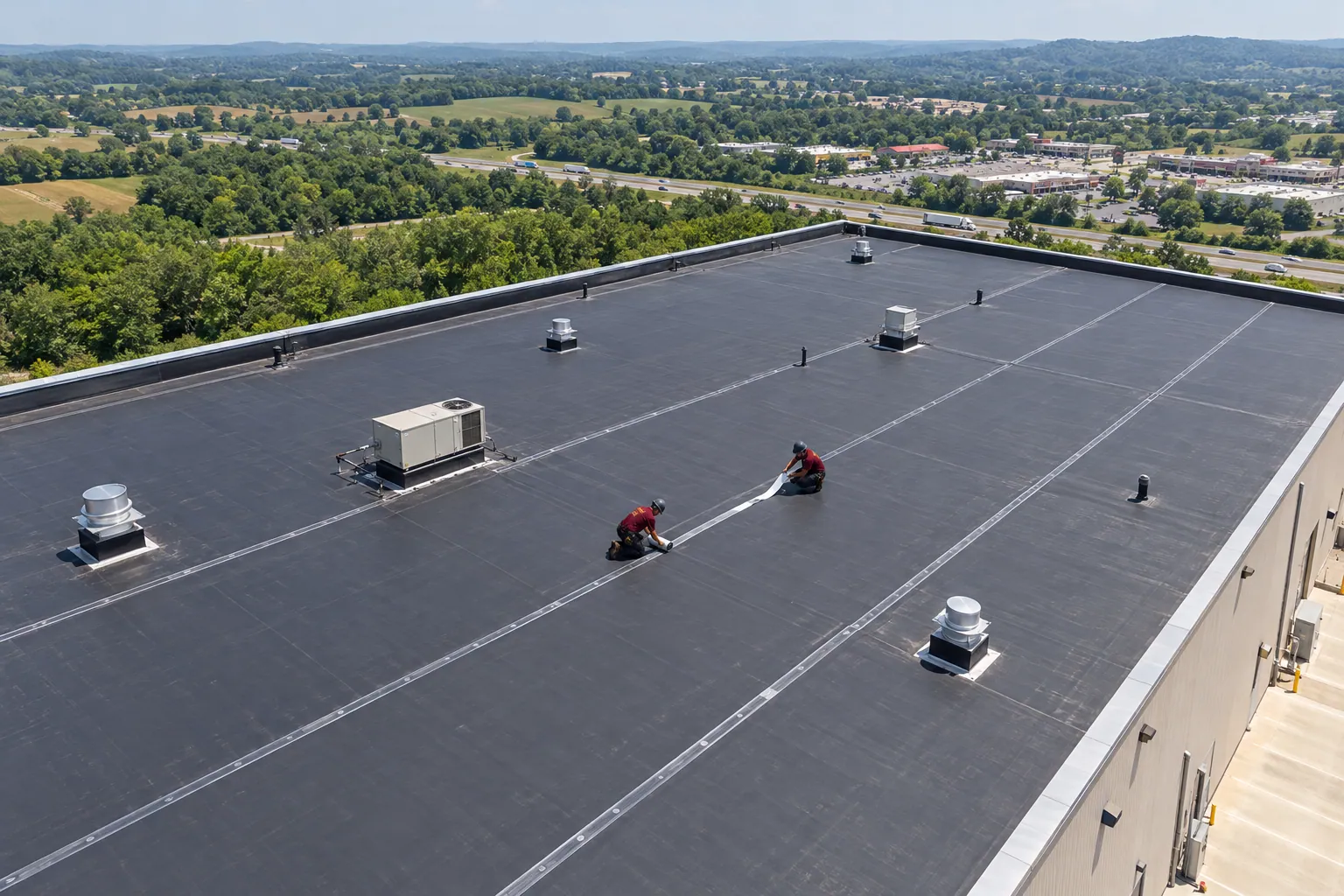
Coping joints, gutters, and wall flashing on older buildings get repaired between replacements.
Commercial roof repairCall and tell us where the wall stains, and the roof walk starts at the parapet above it.
Six steps carry a downtown roof through review, permit, and installation.
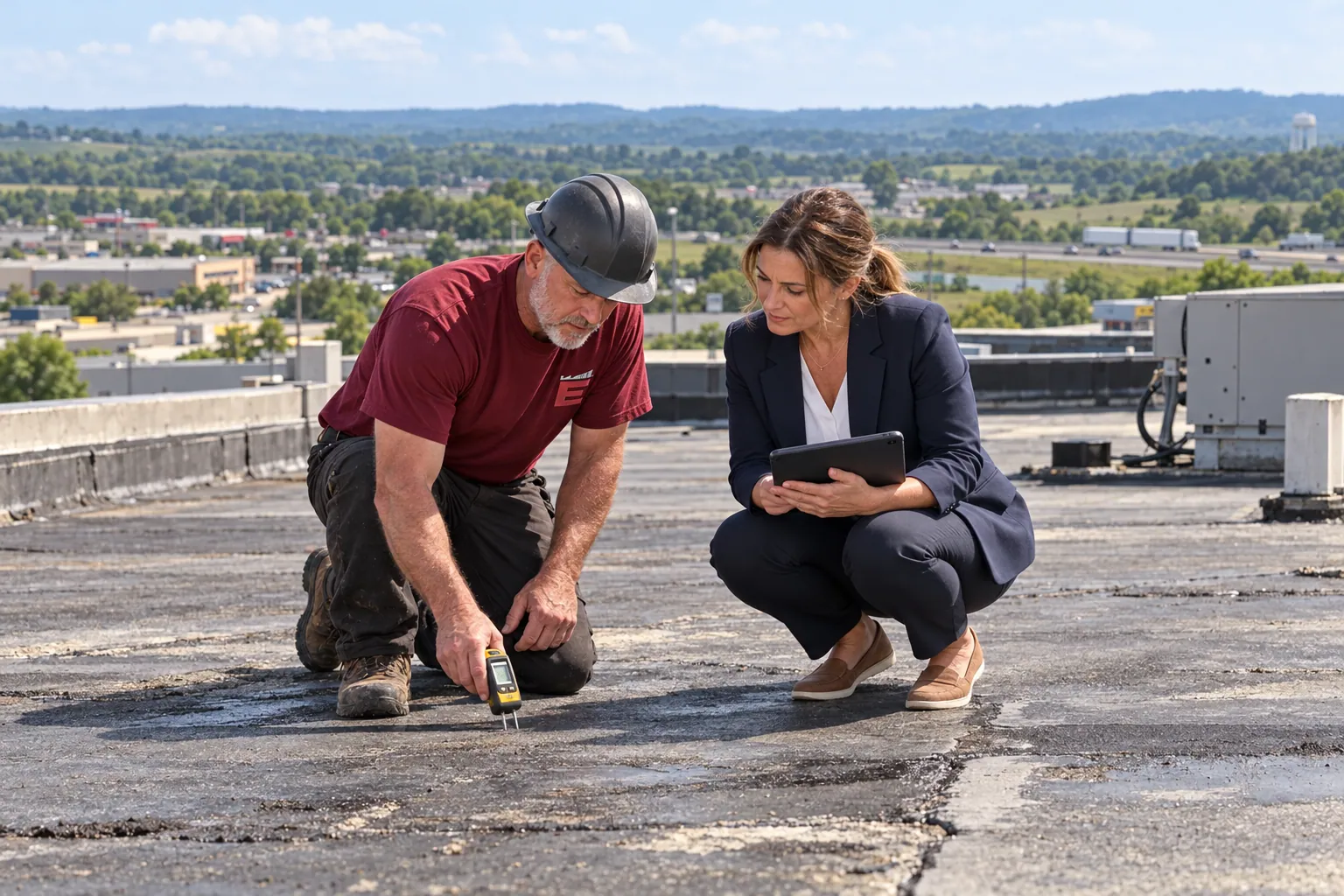
We walk the roof, parapets, coping, and gutters, photograph the building from the sidewalk, and cut cores to count the old layers.
Sidewalk photos, panel color samples, and coping and edge metal profiles go to the Historic Review Board before any visible change is made.
The building permit for the roof work goes to Nelson County Code Enforcement, the local office on the state's Nelson County sheet.
Dumpster, lift, and material spots are set around sidewalks, neighbors, and parking, and roof debris comes down in controlled loads.
Where the roof meets a neighboring building's wall, that joint is flashed and protected during tear-off, and the neighbor hears about loud work before it starts.
The new roof, coping, gutters, and panels go on as approved, and each section is sealed before the crew leaves.
Own a building beyond Bardstown? call us or send us a message. We handle commercial roofing in Elizabethtown and the other towns named below.
Home base, with city plan review for reroofing.
Elizabethtown commercial roofingStorefront rows and Grayson County permits.
Leitchfield commercial roofingChurch and school roofs, LaRue County permits.
Hodgenville commercial roofingSeason-by-season scheduling, Hart County permits.
Munfordville commercial roofingRooftop unit curbs, city building inspector.
Lebanon commercial roofingDrains and scuppers, city inspector review.
Springfield commercial roofingAnswers for owners of older downtown buildings.
It does when the building is inside the historic district and the new roof changes what people see from the street. The City of Bardstown requires Historic Review Board approval of exterior changes there before work begins.
New standing seam panels, a different color, new gutters, and taller coping are the visible items. The building permit is separate and goes to Nelson County Code Enforcement.
Two tracks run side by side. One is the Historic Review Board, with sidewalk photos, color samples, and edge profiles for any visible change, followed by the City Council and a Certificate of Appropriateness by mail. The other is the Nelson County building permit and the roof work itself.
Where the review board approves it. Standing seam suits pitched sections and retrofits on older buildings, and the panel profile and color are what the board looks at. Bring samples and a photo from the sidewalk showing where the new panels would be seen.
Old coping joints lose their sealant, and water gets into the top of the brick wall, where it runs down inside and stains upper floors. New coping is set with sealed joints sloped toward the roof, and if a thicker roof raises the surface, the coping height changes too.
The building address and use, roof area, existing layers, the planned system and insulation thickness, and any changes to drains, gutters, or coping. Nelson County Code Enforcement issues it, and historic district approval, where required, comes from the city's review process separately.
Carefully and in small loads. Dumpster and lift spots are set where they block the least sidewalk and parking, debris comes down in chutes or controlled lifts, and neighbors sharing walls hear about the schedule before tear-off starts.
Begin with a roof walk and sidewalk photos, and the review packet takes shape from there.
Leave a name and number, or call (930) 201-3950 now.