Drains
Drains Set Too High
A drain body that sits above the surrounding roof leaves a ring of water around it, often after insulation was added without lowering the sump.

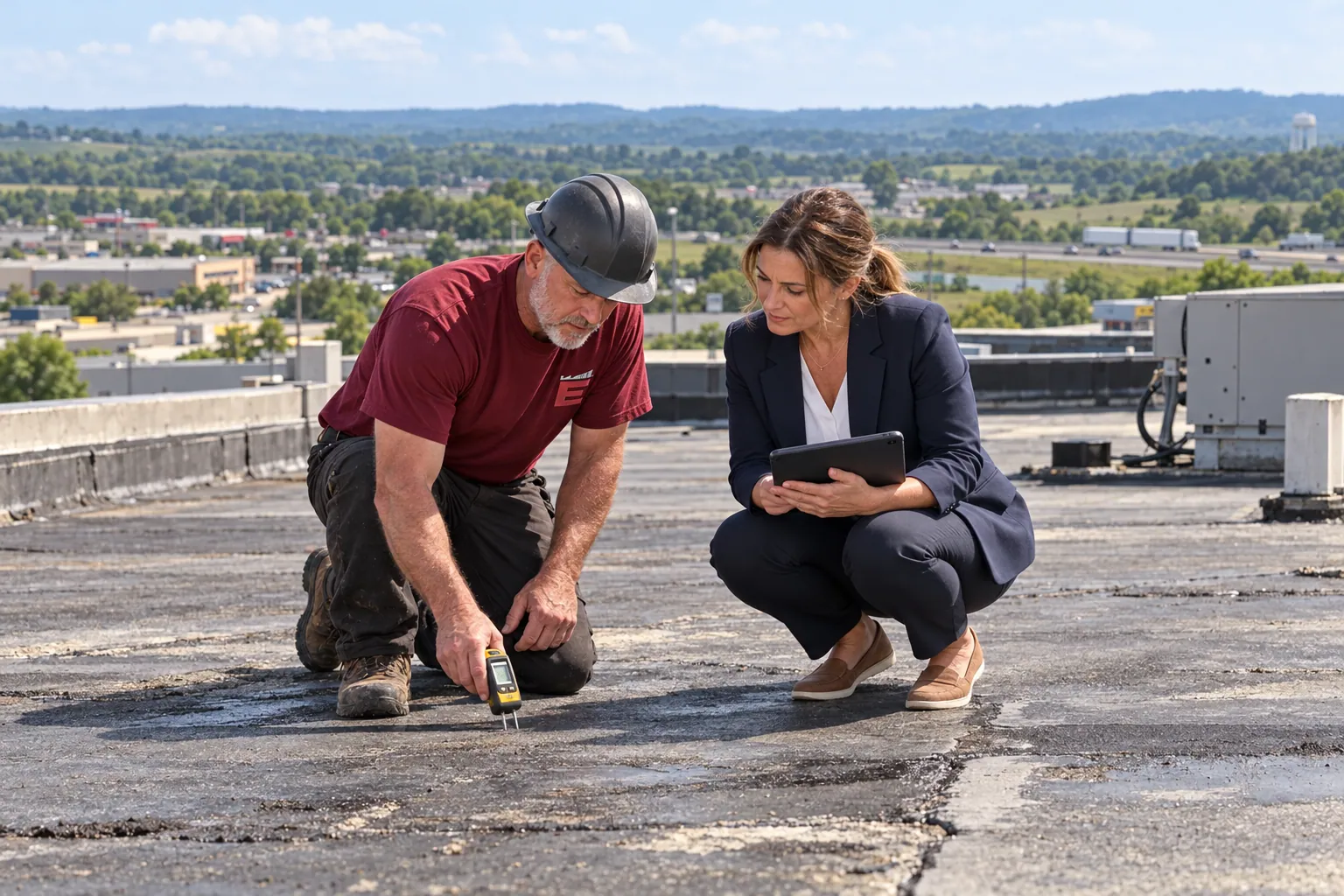
As a Springfield commercial roofing contractor, we fix ponding and drainage on flat roofs with tapered insulation, crickets, new scuppers, and reset drains.
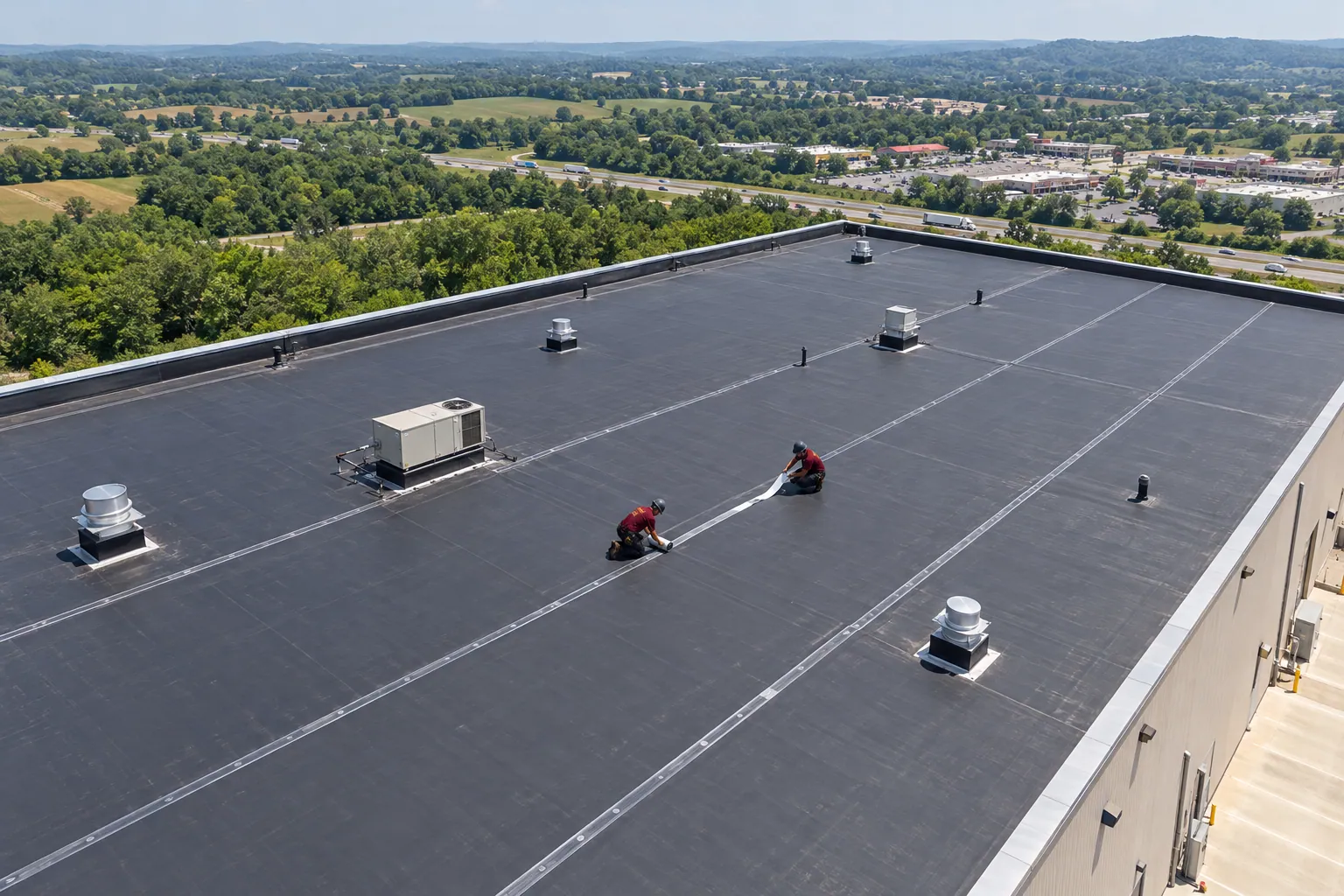
Drainage is the work a Springfield commercial roofing contractor sees most on older flat roofs. Water that stands for days after rain works on seams, soaks insulation at low spots, and adds weight on the deck, so the fix starts with where water sits and where it can leave.
Tapered insulation builds slope toward each outlet, crickets push water off the high side of curbs, and new or relocated scuppers give it an exit. Changes to how water leaves the roof get close attention from inspectors.
Four drainage problems account for most standing water on flat roofs.
A drain body that sits above the surrounding roof leaves a ring of water around it, often after insulation was added without lowering the sump.
Parapet roofs with one small scupper back up in heavy rain and push water over the flashing at the low wall.
Wide curbs block flow on the upslope side, where a cricket is missing and water stands against the flashing.
Roofs lacking an overflow drain or scupper above the primary outlet have nowhere to send water when the main drain clogs.
Moving water off the roof protects every layer under it.
Slope toward each outlet keeps laps and seams from sitting under ponds for days after rain.
Water that leaves quickly stops adding weight at low spots on an older deck.
Insulation at former low spots stays dry, so it keeps its thermal value and stops feeding leaks.
Stains that formed under ponds and around drains stop once the water has somewhere to go.
Overflow drains or scuppers set above the primary outlets give the roof a second path when leaves clog the first.
Drainage changes are drawn on the roof plan, which is what the inspector looks at closely.
These three services handle most drainage work.
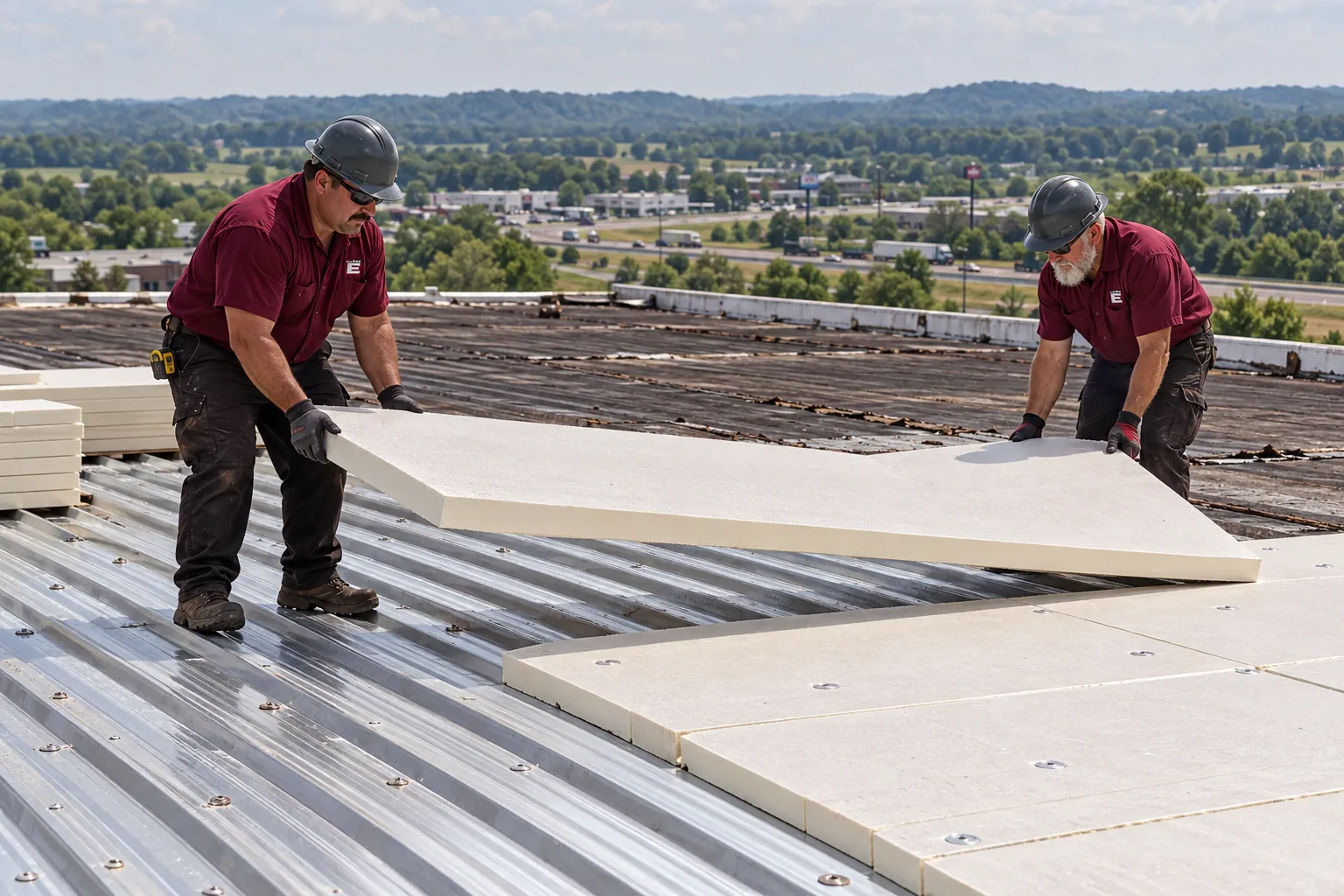
Tapered insulation, crickets, and saddles rebuilt under a new membrane during a full replacement.
Flat roofing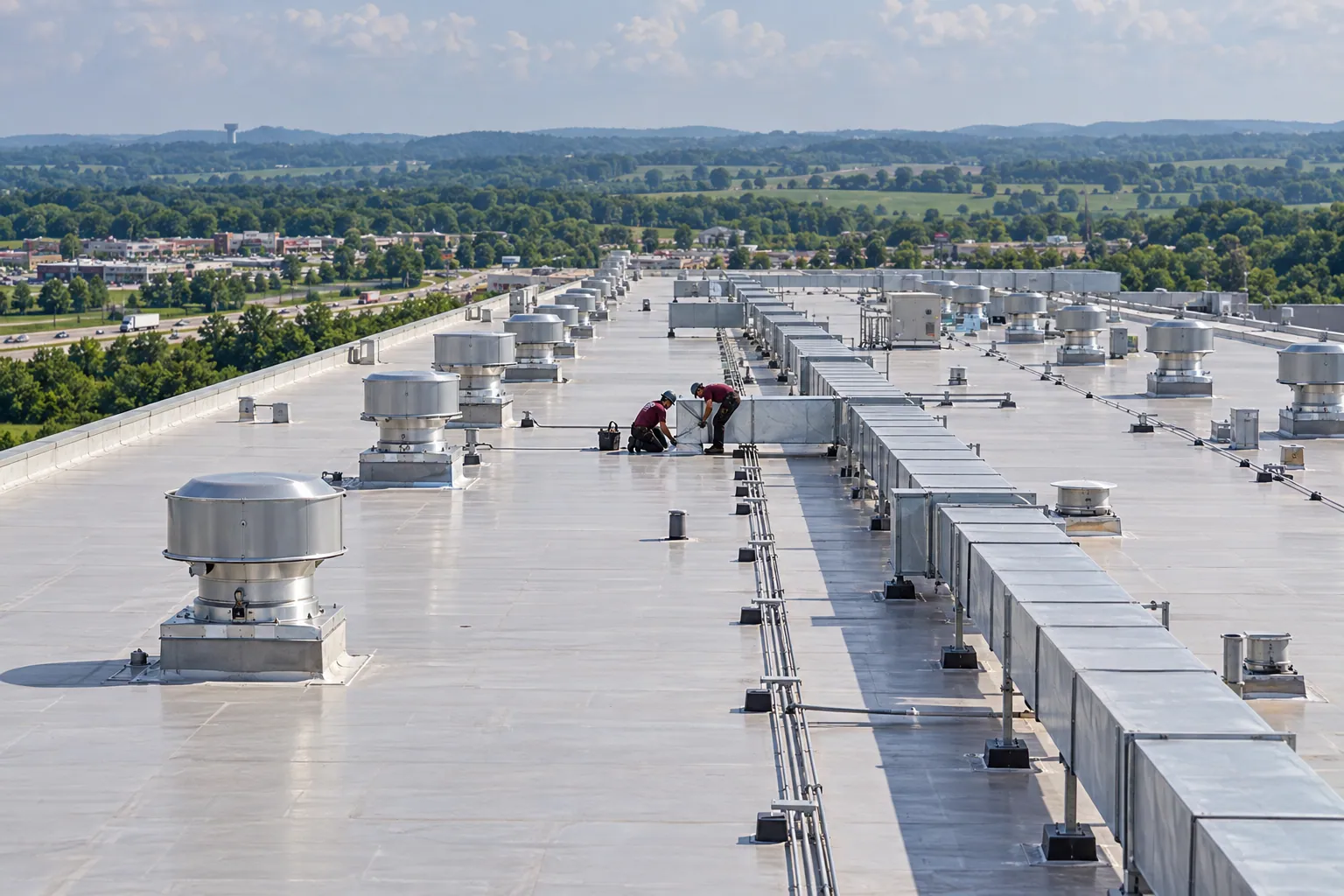
Large roofs with long runs to interior drains get outlet sizing, sumps, and overflow drains planned together.
Industrial roofing
A sunken drain ring or a clogged scupper can be reset or cleared as a repair, short of a new roof.
Commercial roof repairCall and tell us where the ponds form and how long they stay, and the roof walk starts at the lowest spot.
Five steps take a ponding roof to one that drains.
We walk the roof after rain where we can, mark ponding lines, check drain heights, scupper sizes, and curbs, and cut cores at low spots to test the insulation.
Slope, crickets, saddles, outlet locations, and overflow drains are drawn on a roof plan, with curb and threshold heights checked against the added thickness.
Springfield's city inspector reviews the roof drainage work, and bigger projects add a state plan review through the Department of Housing, Buildings and Construction.
Wet insulation at low spots is cut out, tapered boards and crickets go down, and drain sumps are lowered or extended to meet the new surface.
Drains get new clamping rings, scuppers get membrane sleeves through the parapet, and water is run to confirm it reaches each outlet.
Is your building outside Springfield? call us or send us a message. Commercial roofing work also covers Elizabethtown and every town on this list.
Home base, with city plan review for reroofing.
Elizabethtown commercial roofingStorefront rows and Grayson County permits.
Leitchfield commercial roofingChurch and school roofs, LaRue County permits.
Hodgenville commercial roofingSeason-by-season scheduling, Hart County permits.
Munfordville commercial roofingHistoric district roofs, Nelson County permits.
Bardstown commercial roofingRooftop unit curbs, city building inspector.
Lebanon commercial roofingAnswers about ponding, outlets, and the review drainage changes get.
Springfield's city inspector, the only local office named on the state's Washington County sheet. A building outside the city calls for a check with the Kentucky Department of Housing, Buildings and Construction first, and big projects add state plan review. Expect questions on building use, roof area, whether the deck is opened, and changes to scuppers or drains.
Find out why it ponds first. A drain set too high gets its sump lowered, a missing cricket behind a curb gets built, and a roof with too little slope gets tapered insulation drawn to its outlets. Where outlets are too few, new scuppers through the parapet give water a way out.
Yes. A new opening is cut through the parapet at the low point, lined with a membrane sleeve or a metal scupper box tied into the roof, and fitted with a downspout. Because it changes how water leaves the roof, it is a detail to describe clearly to the inspector.
Roofs that rely on interior drains or scuppers behind parapets need a backup path, which is why overflow drains or scuppers are set higher than the primary inlet. The building code's drainage rules and the local official decide the specifics for a given roof.
Inside Springfield the city inspector reviews it; outside the city, confirm jurisdiction with the state housing department before booking work. Plan to describe the building use and roof area, whether the deck is opened, the new membrane or panels, and any changes to parapets, scuppers, or roof drains.
It can, so heights are checked first. Tapered boards add thickness, and the finished roof has to stay below door thresholds and leave room for flashing at walls and curbs. Where space is tight, the layout uses crickets and saddles to move water with less added height.
Start with a walk after rain, and the drainage plan is drawn from what the ponds show.
Leave a name and number, or call (930) 201-3950 now.