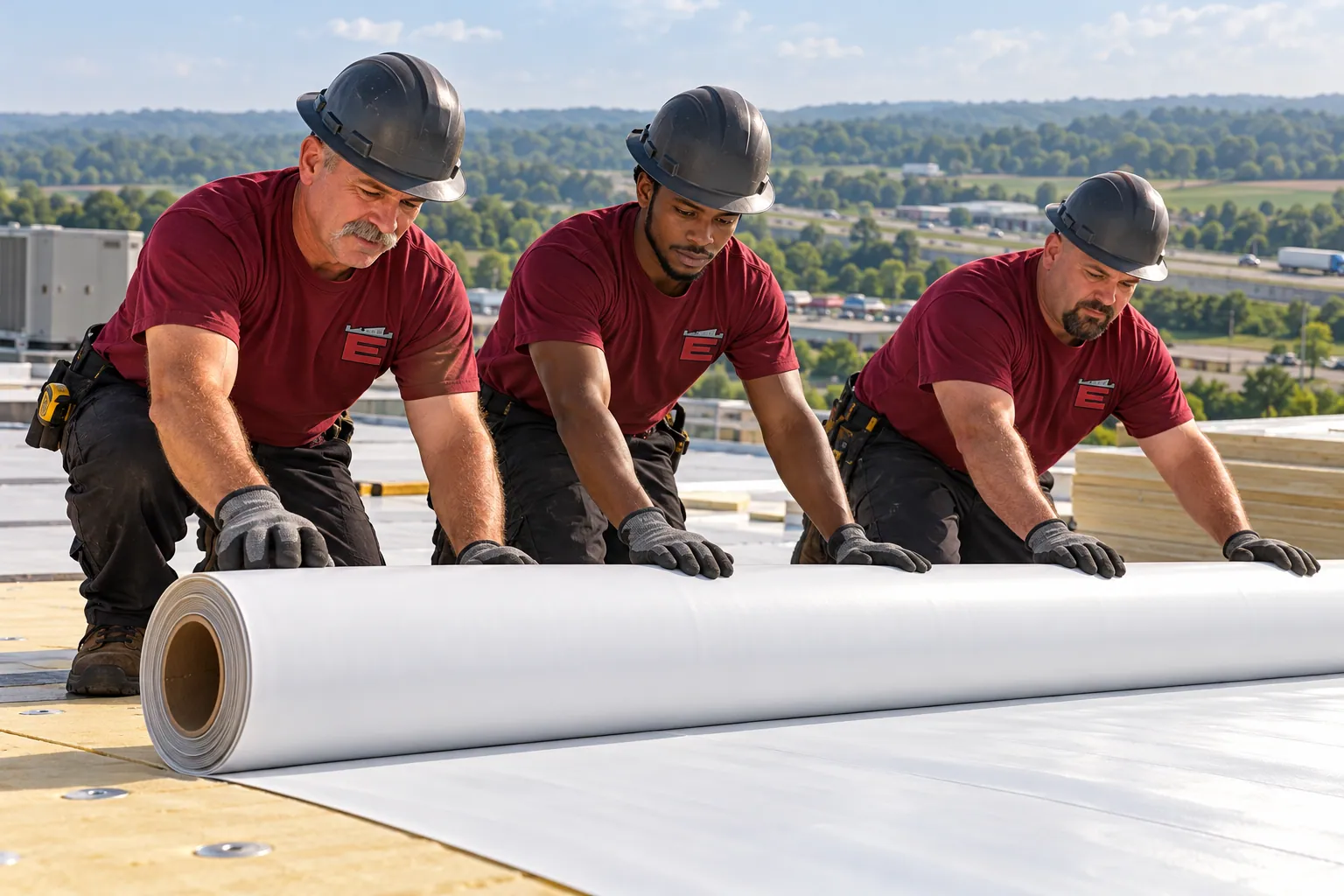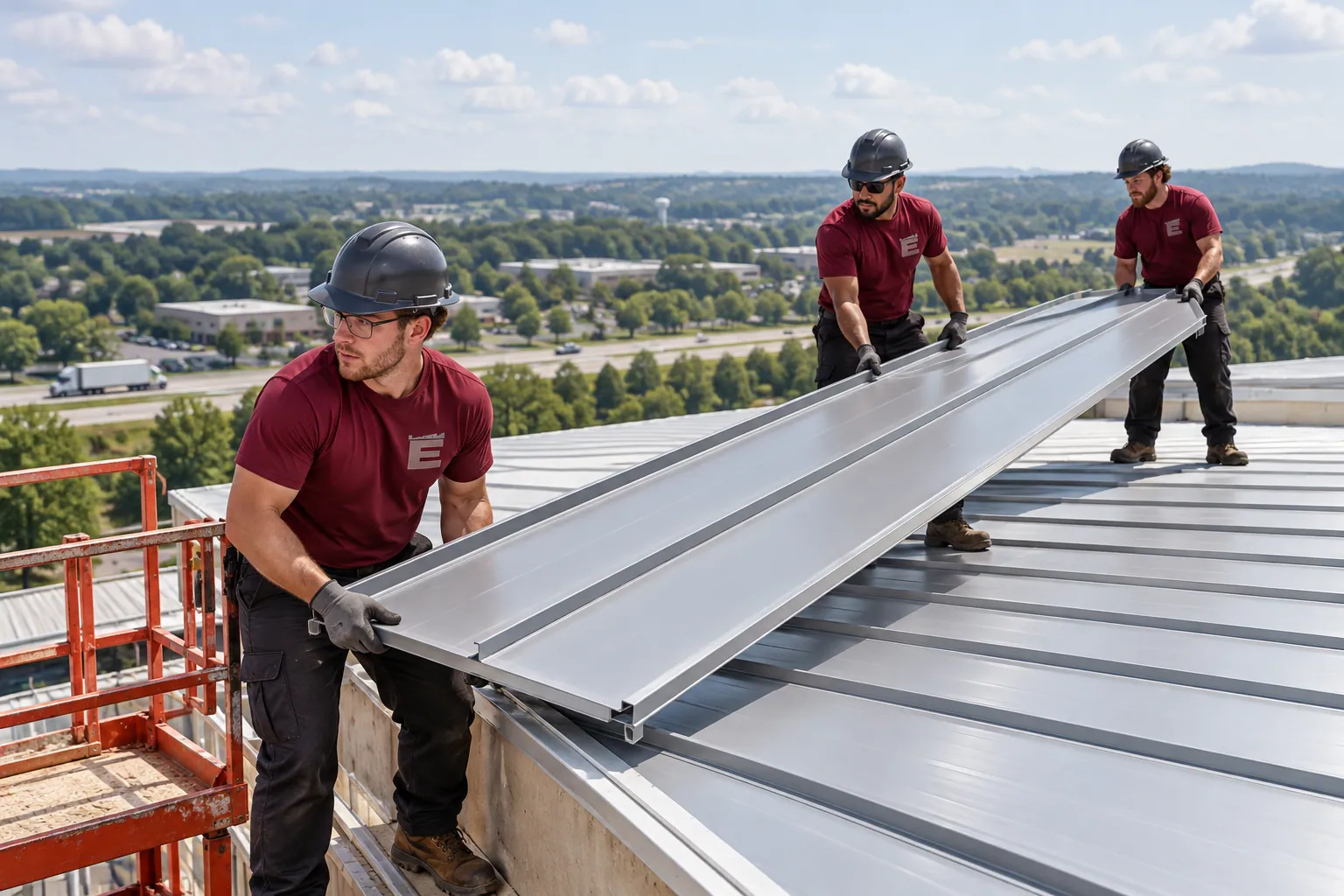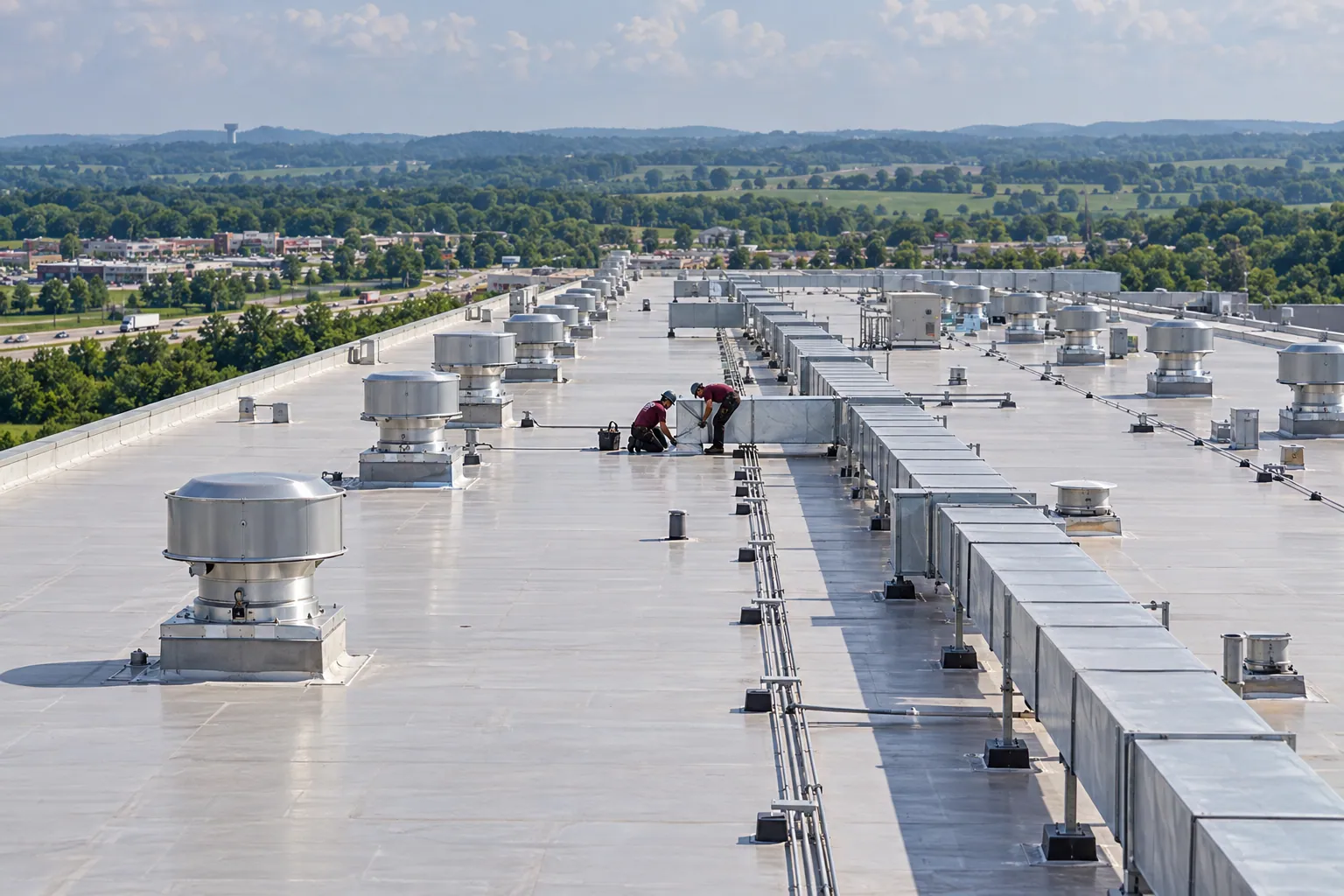
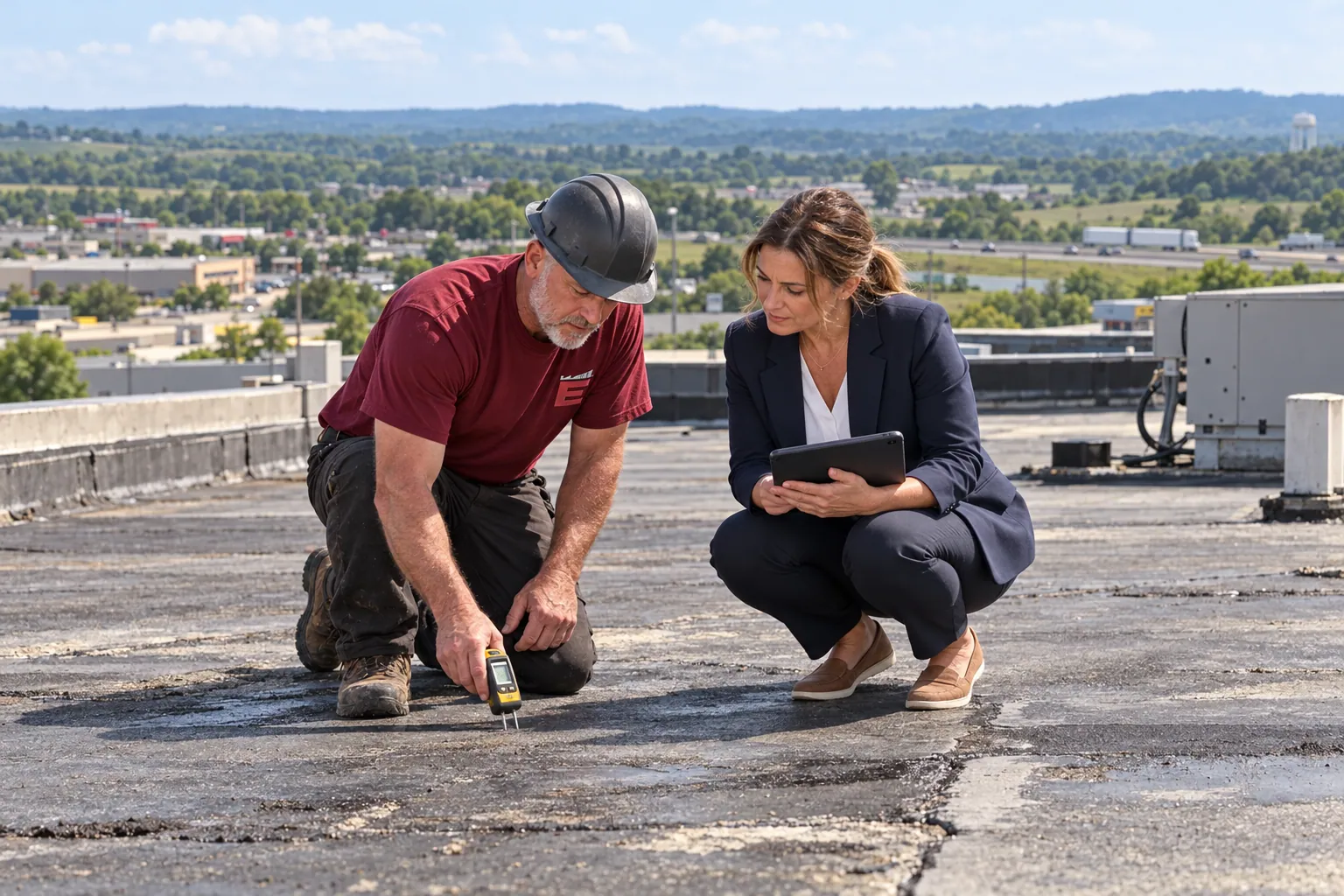
Roofing crew in logo shirts working across a large industrial roof with exhaust fans and rooftop units

Elizabethtown Industrial Roofing Contractor

Find Out Which Membrane Holds Up Under Your Plant's Exhaust

As an Elizabethtown industrial roofing contractor, we roof plants and large warehouses around process exhaust, heavy rooftop units, and long drainage runs.

  • Exhaust CheckedMembrane matched to residue
  • Heavy Units PlannedCurbs and frames
  • Long Drainage RunsDrains and scuppers
  • Phased SectionsPlant keeps running

Is This Roof A Fit for a Standard Membrane?

Before an Elizabethtown industrial roofing contractor picks a sheet, the stacks and vents get checked, because the residue on the roof decides between these two.

Roofer in a logo shirt walking a low-slope commercial roof and checking the membrane and flashing

Oil-Resistant Membrane

PVC or another oil-resistant sheet for roofs that catch residue.

Exhaust
Grease, oil mist, or chemical vapor reaching the roof
Coverage
Whole roof, or zones around the worst stacks
Seams
Hot-air welded
Check
The maker's chemical resistance chart for the process
Extras
Grease boxes and metal curb caps at fans
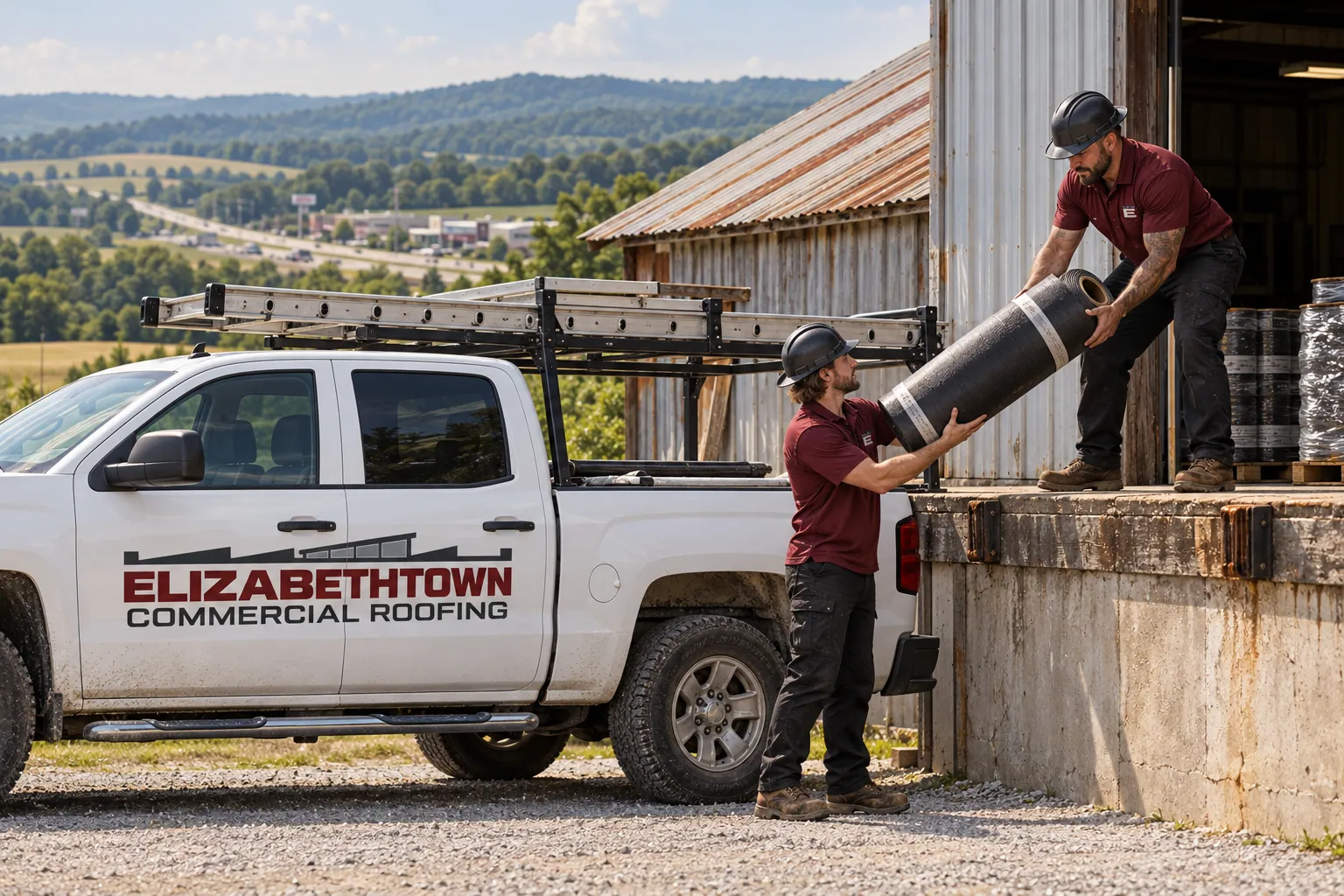
Roofing crew in logo uniforms staging materials beside a work truck at a commercial building

Standard TPO or EPDM

Fits plant roofs where exhaust leaves little or no residue.

Exhaust
Clean air, heat, or steam only
Coverage
Full field
Seams
Welded TPO or taped EPDM
Check
Residue from idle or seasonal stacks
Extras
Walkway pads to every service point

Industrial Roofing Hazards on Elizabethtown Plants

Plant roofs carry loads and residue that office roofs never see, and these four conditions show up on most of them.

Exhaust

Softened Sheet Near Stacks

Oil and grease that settle on standard TPO or EPDM swell or soften the membrane around exhaust fans and process vents.

Equipment

Crushed Insulation Under Units

Heavy units on low curbs or steel frames, plus service carts, crush insulation that lacks a high-density cover board.

Drainage

Ponding on Long Runs

Water that travels far to an interior drain or scupper settles in low spots between outlets, especially around wide curbs.

Openings

Leaks at Skylights and Smoke Vents

Skylights and smoke vents spread across the field each need their own curb flashing, and old ones leak at the curb corners.

Industrial Roofing Systems for Elizabethtown Plants

The membrane, insulation, and drainage plan are chosen together for a plant roof.

Oil-Resistant Membrane Zones

A full PVC roof where exhaust is widespread, or a separate membrane zone and sacrificial pads around one grease stack, with containment boxes at kitchen or process fans.

Compare with TPO

High-Density Insulation and Walkways

Cover boards rated for foot traffic and walkway pads routed to every service point protect the roof where plant staff work.

EPDM on plant roofs

Drainage for Large Roofs

Interior drains with clamping rings and sumps, scuppers on the low side, gutters off open edges, and overflow outlets set above the primary drains.

Flat roof drainage

What a New Industrial Roof Gives Your Plant

On a plant, the roof protects production as much as the building.

On The Roof

Membrane Matched to the Process

A sheet chosen from the maker's chemical chart holds up near the stacks that vent oil mist instead of softening around them.

Drains That Keep Up

Tapered insulation and outlets sized for long runs move rain off wide roofs before it ponds around curbs.

Inside The Building

Production Lines Kept Dry

Sections are torn off and dried in one at a time, with protection over lines under any deck repair.

Fewer Service-Call Leaks

Walkway pads and curb caps keep maintenance traffic and dripping residue off the open membrane.

For Planning And Budget

Shutdowns Set in Advance

Unit shutdowns, crane days, and hot work rules are agreed with plant staff before the first section opens.

A Roof Plan for the Next Repair

Photos and a marked roof plan show which zones carry special membrane and where each drain sits.

Exhaust Residue Soaking the Roof?

Call and tell us which stacks vent oil or grease, and the roof walk starts with your maintenance staff at those fans.

Planning With an Elizabethtown Industrial Roofing Contractor

Plant roofs are planned around production, so the order of work starts with your staff.

  1. Inspect Your Roof

    On The Roof

    We walk the roof with your maintenance staff to find which stacks run hot, which vent oil mist, and which sit idle, then cut cores and check the deck from inside.

  2. Match the Membrane

    Paperwork

    The maker's chemical resistance chart for your process settles the sheet, and zones near grease exhaust get oil-resistant membrane or sacrificial pads.

  3. Plan the Drainage

    Paperwork

    Outlet types, tapered insulation, crickets, and overflow drains are drawn for that roof so water reaches an exit across long runs.

  4. Schedule Around Production

    At The Building

    Unit and makeup air shutdowns, crane and lift days, fire watch and hot work rules, and crew routes away from forklift lanes are set with the plant.

  5. Replace in Sections

    On The Roof

    Each area is torn off and dried in before the crew leaves, tied to the old roof with a temporary seal so overnight rain stays outside.

  6. Pads, Caps, and Records

    Paperwork

    Walkway pads go to every service point, metal curb caps go on at fans, and you get photos and a marked roof plan.

Roof Work Beside Industrial Projects

Plant campuses usually mix roof types, and these two services cover the rest.

Roofers wearing the company logo heat-welding a white TPO membrane seam on a commercial roof

TPO Roofing

Office wings and cooled warehouse space on a plant campus often take welded white TPO over new insulation.

TPO roofing
Roofers wearing the company logo fastening standing seam metal panels on a commercial building

Commercial Metal Roofing

Pitched steel buildings beside the plant take standing seam or R-panel roofs, installed or repaired with matching parts.

Commercial metal roofing

Industrial Roof Questions From Hardin County Plants

Answers about exhaust, drainage, and keeping a plant running during the work.

What makes an industrial roof different from other commercial roofs?

Size, load, and what comes up from inside. Industrial roofs cover more area, carry heavier units on curbs or steel frames, catch residue from stacks and vents, and see more maintenance traffic. That changes the membrane, calls for higher-density insulation or a rated cover board, and shapes how the crew works around the building.

Which industrial roof membrane holds up near exhaust fans?

PVC and other oil-resistant sheets hold up better near grease, oils, and chemical exhaust than standard EPDM or TPO, which can swell or soften. The maker's chemical resistance chart settles it for a given process, and one grease stack can get its own membrane zone and pads instead of a whole new roof type.

Roof drains vs scuppers: which works on a large industrial roof?

Usually both. Interior drains suit wide roofs where water sits far from any edge, scuppers suit parapets on the low side, and gutters suit open edges. Overflow drains or scuppers sit higher than the main inlet as a backup, and tapered insulation with crickets steers water to each outlet.

Can a plant roof in Hardin County be replaced while the plant keeps operating?

In most cases, yes. The roof is replaced in sections, each torn off and dried in before the crew leaves. Shutdowns of nearby units and intakes, protection over lines under deck repairs, crane days, hot work rules, and crew routes away from forklifts are planned with plant staff.

Why do large flat roofs need tapered insulation?

Because a nearly flat deck leaves water in low spots between drains, around curbs, and along walls. Tapered boards are cut with built-in slope and laid in a pattern drawn for that roof, with crickets and saddles. The added thickness raises the surface, so curb and threshold heights get checked first.

Do skylights and smoke vents need attention during a plant reroof?

Yes. Each skylight and smoke vent sits on a curb that needs new flashing run high enough above the new roof, and older units that crack or leak at their curb corners are often replaced while the roof is open. The added insulation height is checked against every curb.

Bring In an Elizabethtown Industrial Roofing Contractor

Start with a roof walk alongside your maintenance staff and a written plan for every stack, drain, and shutdown.

Call Us (930) 201-3950