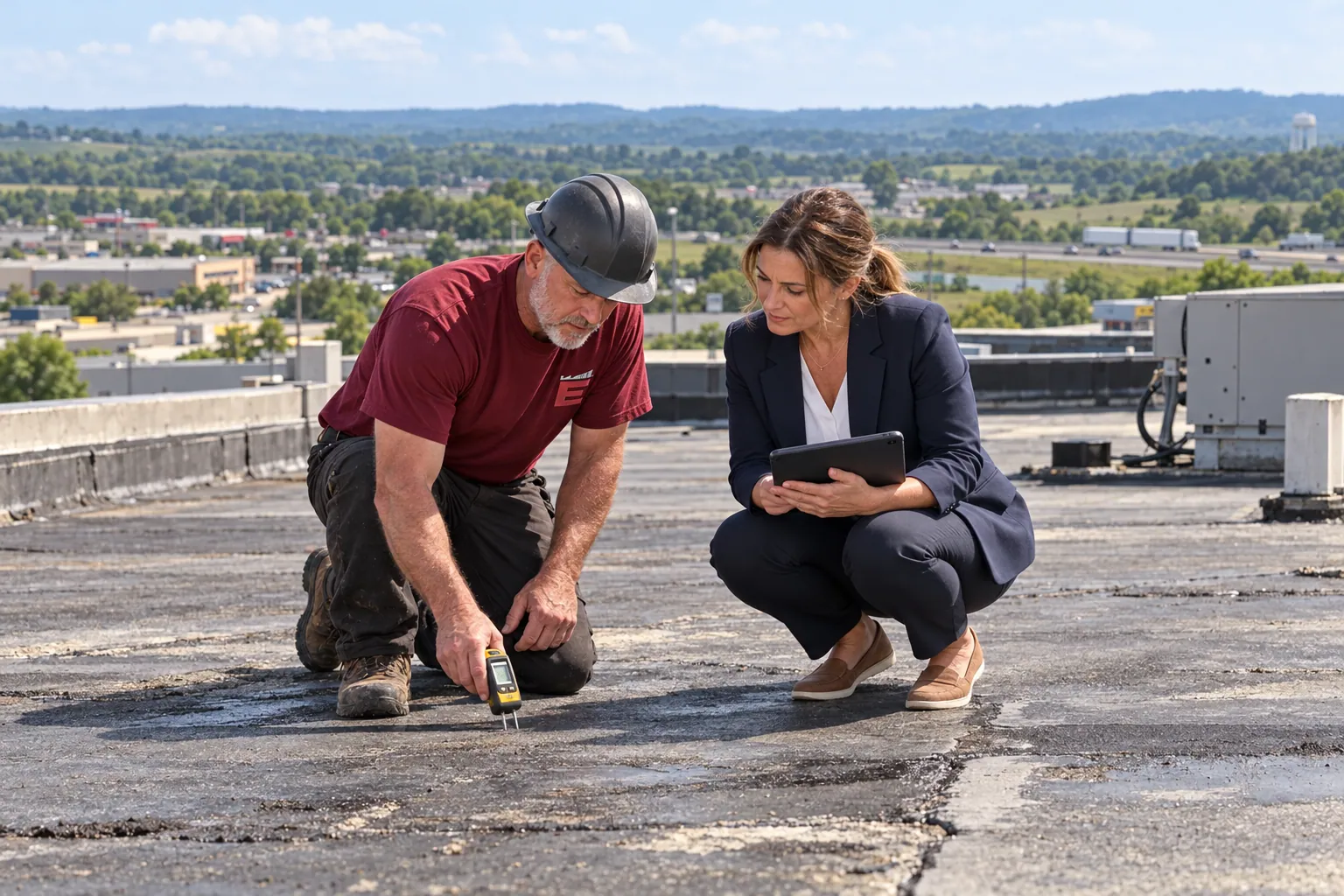
Commercial Roof Repair
A few leaks at known spots on a dry roof: welded or taped patches, curb and wall flashing, drain resets, and metal lap reseals.
Commercial roof repair
We offer commercial roofing services in Elizabethtown for six kinds of roof work, from a single leaking seam to a full tear-off and replacement.
Each of our commercial roofing services in Elizabethtown starts with the same roof walk, then splits by the roof system on your building.
A few leaks at known spots on a dry roof: welded or taped patches, curb and wall flashing, drain resets, and metal lap reseals.
Commercial roof repair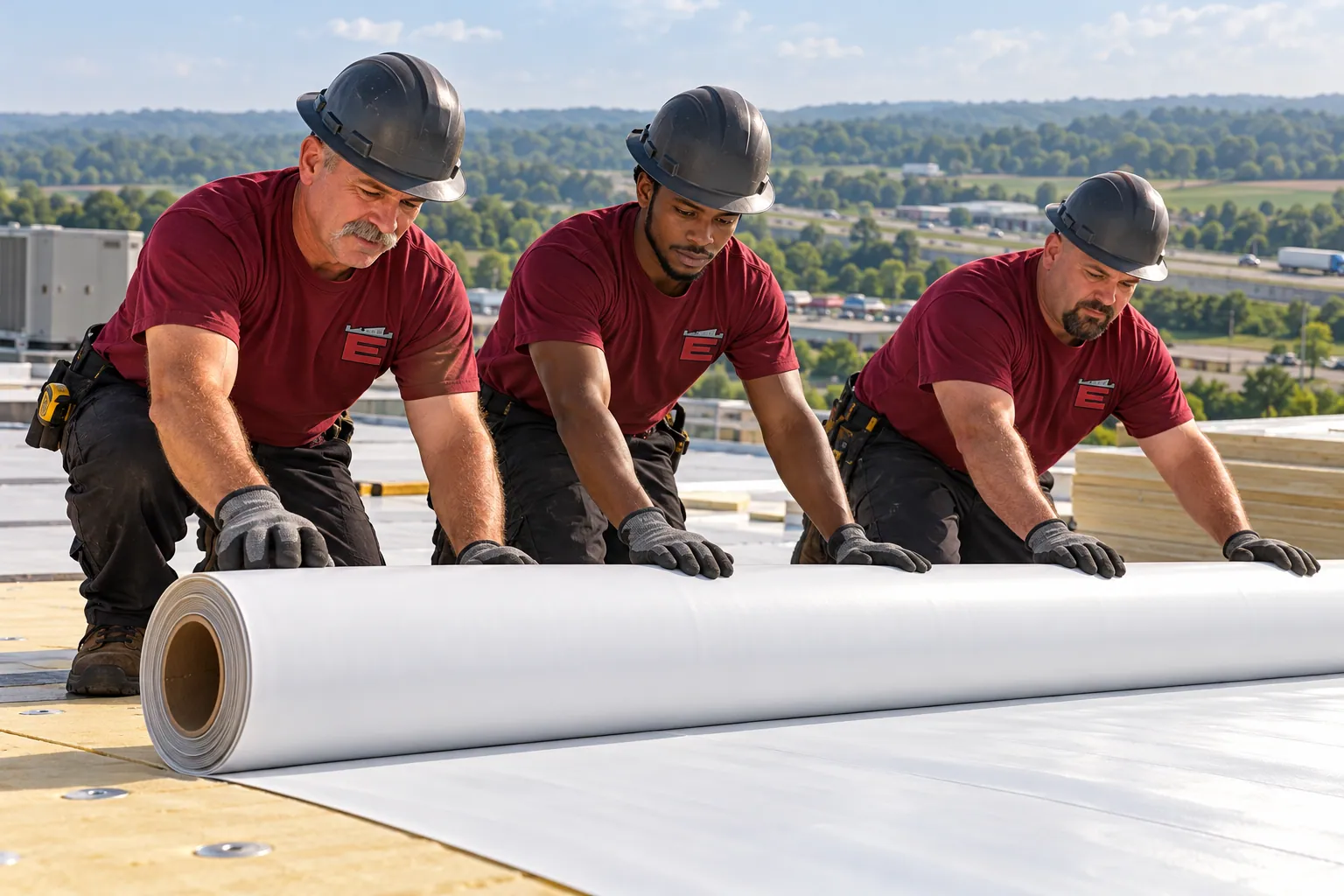
Cooled warehouses, retail, and offices on low-slope decks, with heat-welded white sheet and pre-formed flashing at every unit.
TPO roofing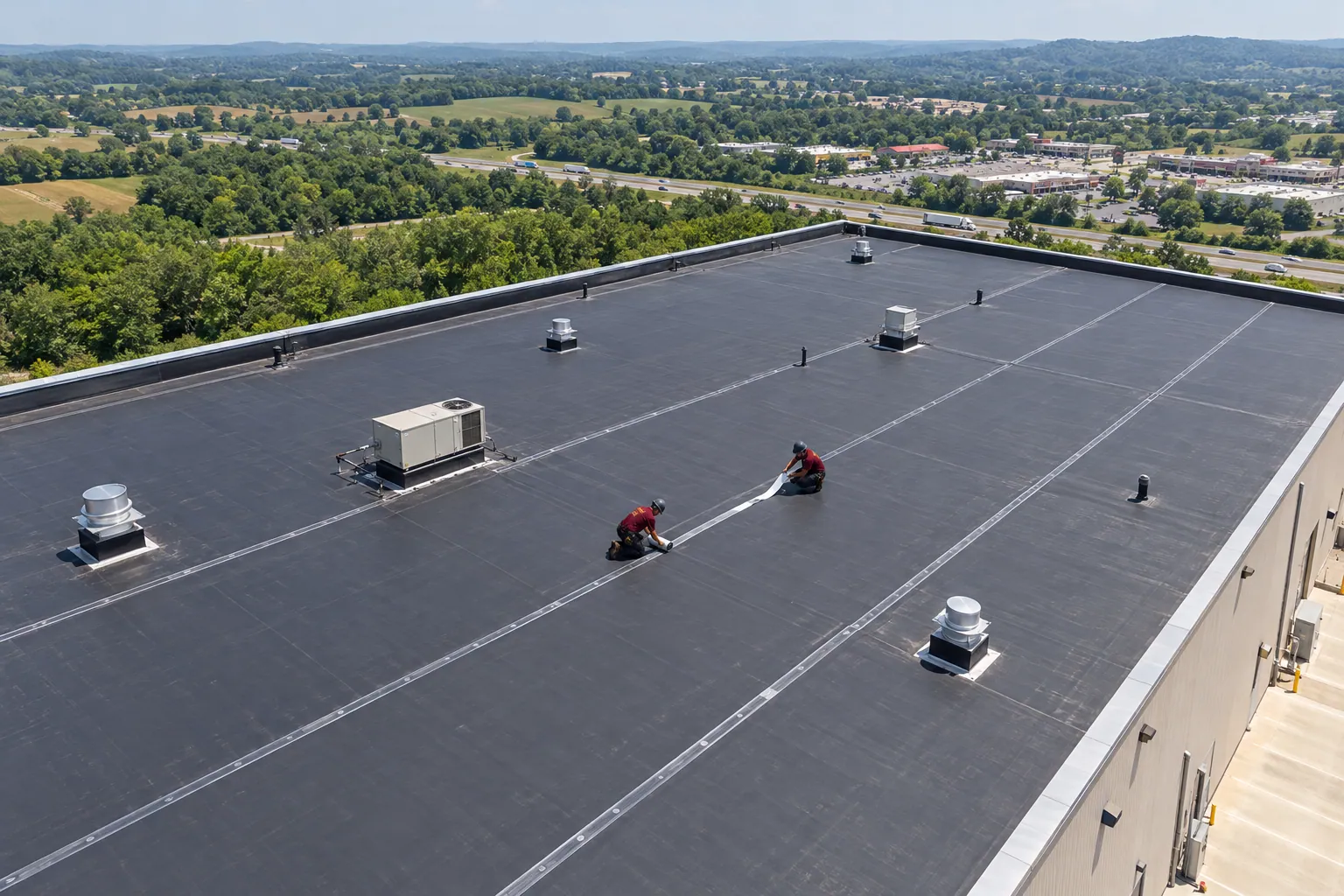
Big, plain flat roofs, heated storage, schools, and churches, using wide rubber sheets with taped, primed seams.
EPDM roofing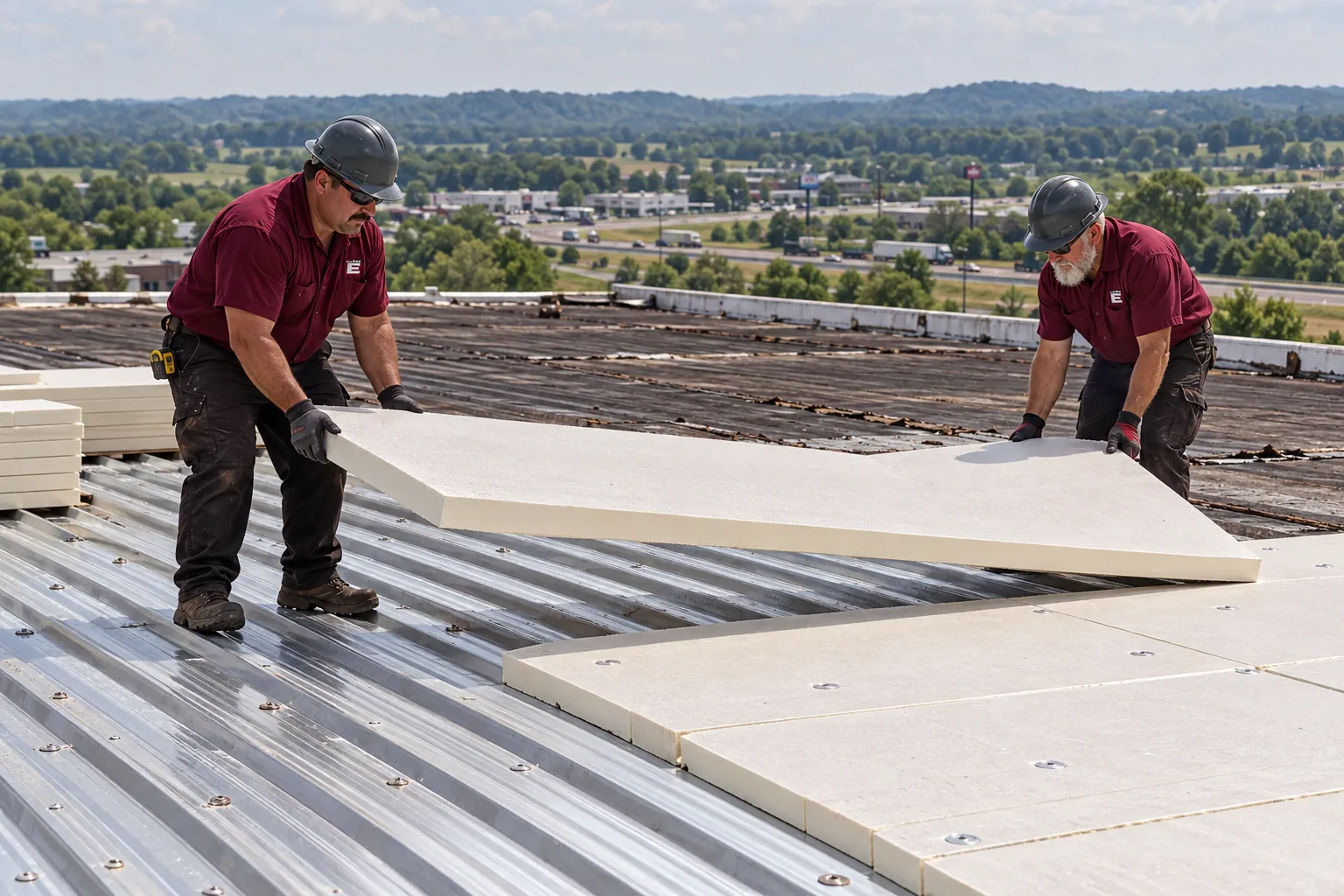
Worn low-slope roofs that need a recover or tear-off, tapered insulation for ponding, and edges rebuilt to the new height.
Flat roofing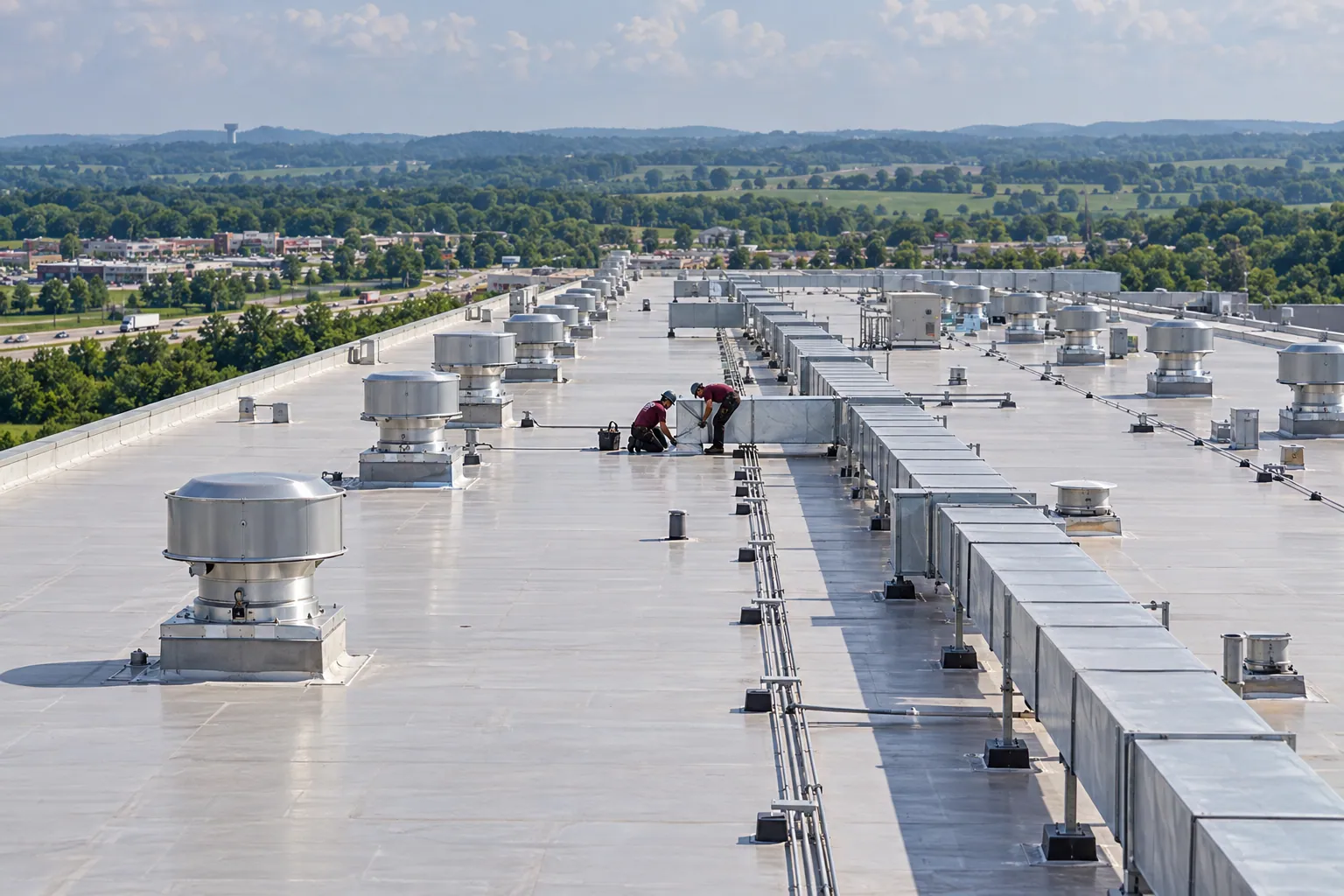
Plants and distribution buildings with exhaust residue, heavy units, and long drainage runs, replaced in sections.
Industrial roofing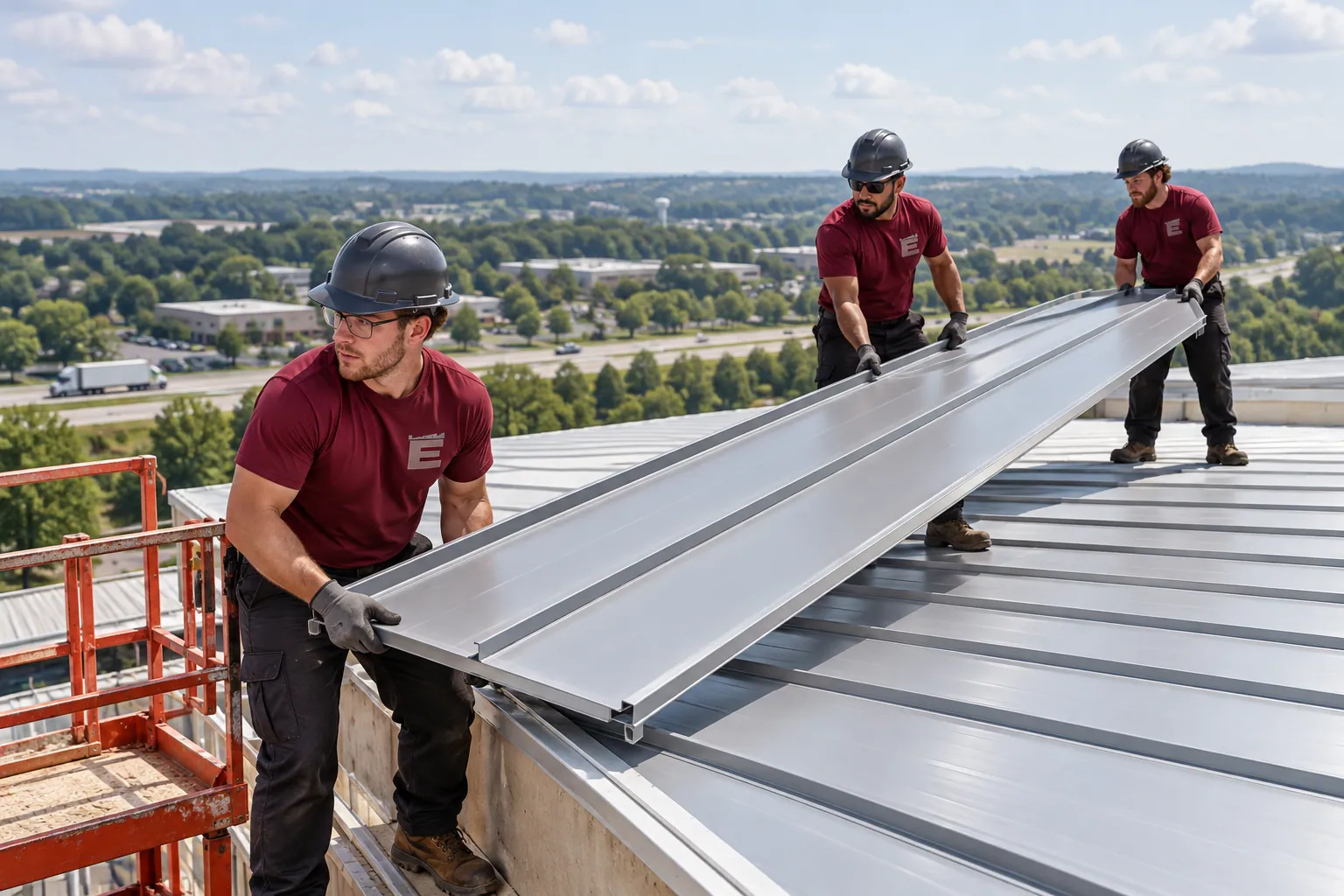
Pitched steel buildings and retrofits over flat roofs: standing seam or R-panel installs, repairs, and upkeep.
Commercial metal roofingMost roofs fall on one side of this comparison before the specific system is chosen.
Single-ply sheet over insulation and cover board.
Painted steel panels over purlins or a frame.
When these show up together, more repairs only buy a little time, and a moisture survey comes next.
Call and describe the roof, the building, and what you see inside, and we can point you to the right first step.
A full replacement runs in six steps, and repairs use the first two.
A roof walk covers the field, seams, flashing, edges, drains, and units, and a look from inside shows stains, rusted deck, and daylight at laps.
Core cuts through every layer show the layer count, insulation type and thickness, and deck type, while infrared or moisture meter scans mark wet areas between them.
One dry, attached layer can take a recover; wet insulation, several layers, or deck damage call for tear-off, and the local building official confirms.
Parapet coping, edge metal, gutters, unit curbs, and drain rings are scoped for the new height, and mechanical contractors are booked for the unit work.
A full replacement usually has to meet Kentucky's commercial energy code, the 2012 IECC and ASHRAE 90.1-2010 with state amendments, for roof insulation.
Each section is torn off or prepared, insulated, covered, and sealed to the old roof before the crew leaves.
Answers on tear-off, recovers, code, system choice, and taxes.
A recover fits a roof with a single existing layer that is dry and firmly attached. A tear-off fits wet insulation, two or more layers, or a deck that needs repair, and it lets edge heights be reset. Chapter 15 of the Kentucky Building Code covers roof assemblies, and the local building official decides on a recover.
They show where the old roof is wet, which sets how much comes off and how the new roof is built. Cores are small samples through every layer to the deck, patched as they are cut. Infrared and moisture meter scans fill in between them, and the wet areas go on a roof plan for removal.
Each of those details is reworked, because new insulation raises the surface and old flashing comes off with the old roof. Coping is removed and reset with new cleats, edge metal and gutters are replaced for the new height, units are lifted so curbs can be raised, and drains get new clamping and extension rings.
A full replacement usually does, and the local building official checks roof insulation when the permit is issued. Kentucky's commercial energy code is the 2012 IECC and ASHRAE 90.1-2010 with state amendments, in effect since October 1, 2014. Ask the official whether a recover or partial replacement triggers the same requirement.
Slope, rooftop traffic, and what reaches the roof from inside decide. Low-slope roofs take a membrane: welded white TPO on cooled buildings, taped EPDM on big plain roofs and colder spaces, PVC near grease or process exhaust. Pitched roofs on steel framing usually take metal panels. A roof walk and core cut narrow it to one or two.
Edges, curbs, and drains, more than the field membrane. That means perimeter edge metal and its cleat, sealed and sloped parapet coping, curb flashing run high enough at units and fans, drain rings and sumps set low enough, and pipe boots or pitch pans at conduit and gas lines. Photos of these at the end make later inspections easier.
Wind at the edges, hail on the field, heavy rain at the drains, and freeze-thaw at the flashing. Each has an answer: edge cleats and corner fastening for wind, a cover board and thicker sheet for hail, drain sizing and overflow outlets for rain, and flexible flashing with sealed coping for freeze-thaw.
IRS Publication 946 allows a roof on a nonresidential building already in service to be treated as qualified real property for Section 179. It puts the 2026 deduction ceiling at $2,560,000, reduced after $4,090,000 of qualifying property. Keep invoices that separate roofing, insulation, and edge metal, plus photos, and let your CPA decide how it applies.
Book one, and the cores and photos decide which of these services your roof needs.
Leave a name and number, or call (930) 201-3950 now.