Parapets
Open Coping Joints on Shared Walls
Coping joints that lose their sealant let water into the top of the wall, where it runs down inside and stains two ceilings at once.

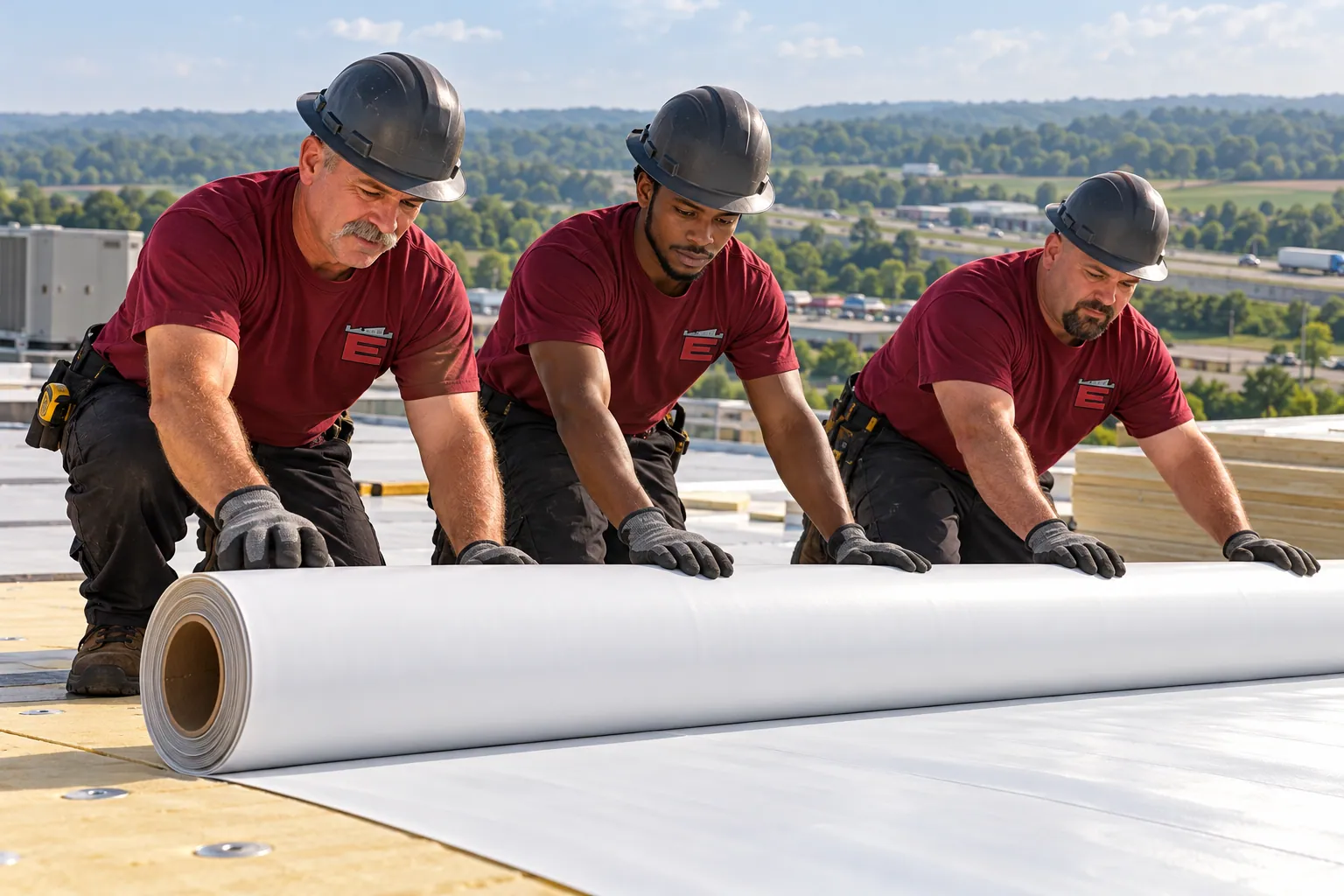
As a Leitchfield commercial roofing contractor, we repair and replace roofs on storefront rows, strip centers, and the shared parapet walls between them.
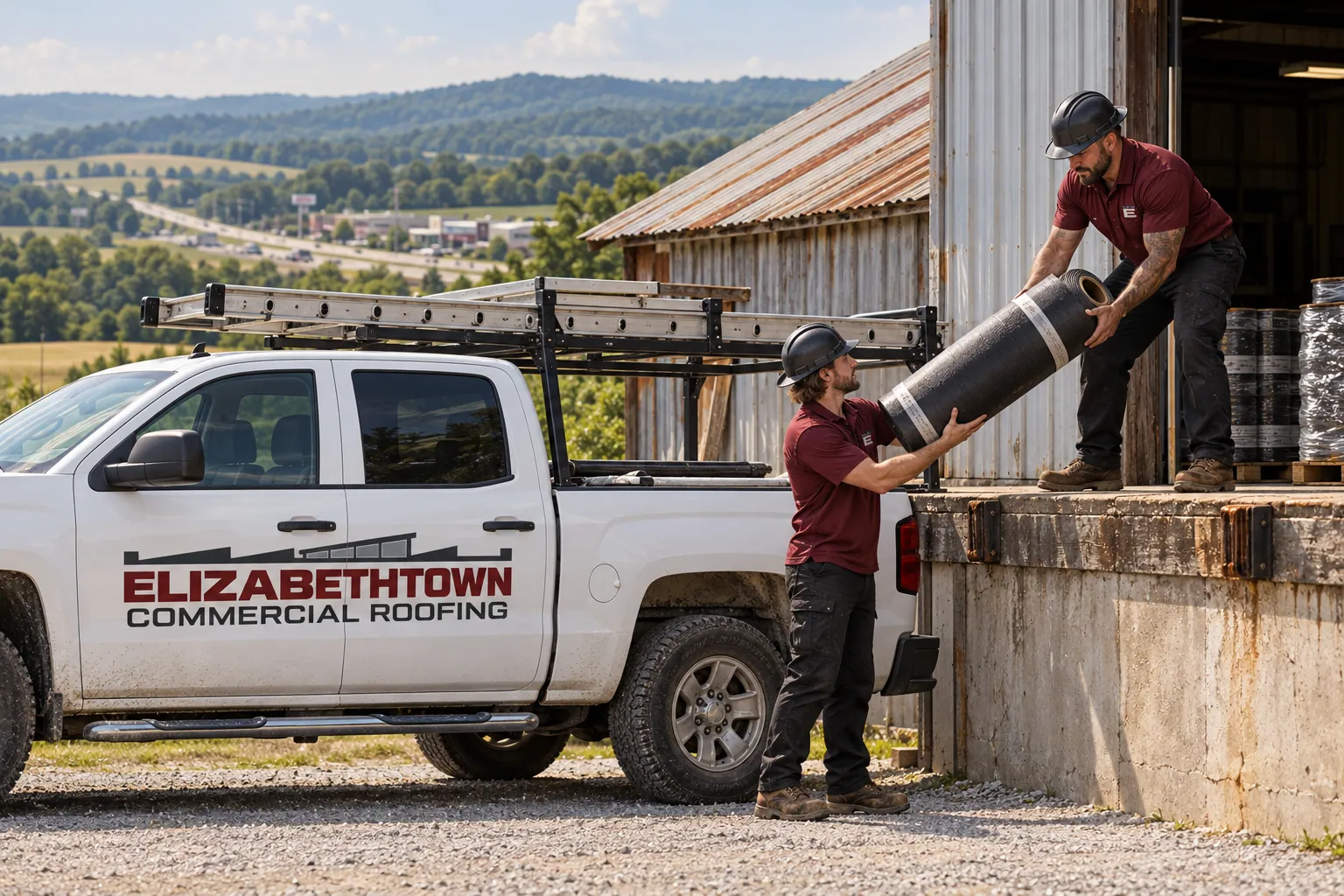
Hiring a Leitchfield commercial roofing contractor for a storefront row means planning one roof that covers several tenants. Water that enters over one shop often travels along the deck and shows up next door, so the leak search covers the whole roof instead of one unit.
Shared parapet walls between storefronts carry coping and wall flashing on both sides, and those joints open as the walls move. Work is staged one storefront at a time so each tenant keeps its doors open.
Storefront roofs show the same four problems again and again, mostly where one tenant's roof meets the next.
Coping joints that lose their sealant let water into the top of the wall, where it runs down inside and stains two ceilings at once.
Each tenant brings its own rooftop unit, so a short roof can hold several curbs, and each curb is another flashing joint to keep tight.
Sign supports and conduit that pass through the membrane or parapet are often sealed with roof cement instead of a pitch pan or pipe boot.
Low-slope storefront roofs drain toward the back, and a clogged scupper or downspout there backs water up against the rear parapet.
On a storefront row, a new roof pays off for the building owner and every tenant under it.
New coping and wall flashing on shared parapets stop water from running down inside the walls between tenant spaces.
Each unit curb gets its own welded or taped flashing, set high enough above the finished roof.
Closing leaks at the source keeps stains from moving from one tenant's ceiling to the next.
Staging one storefront at a time keeps entrances, parking, and deliveries clear for the shops still trading.
A single scope and photo set covers every tenant space, which makes cost sharing and lease questions easier to sort out.
Leitchfield reroofing goes to Grayson County's building inspector, so one permit call covers the job.
Three services fit storefront rows, depending on the roof under the current membrane.
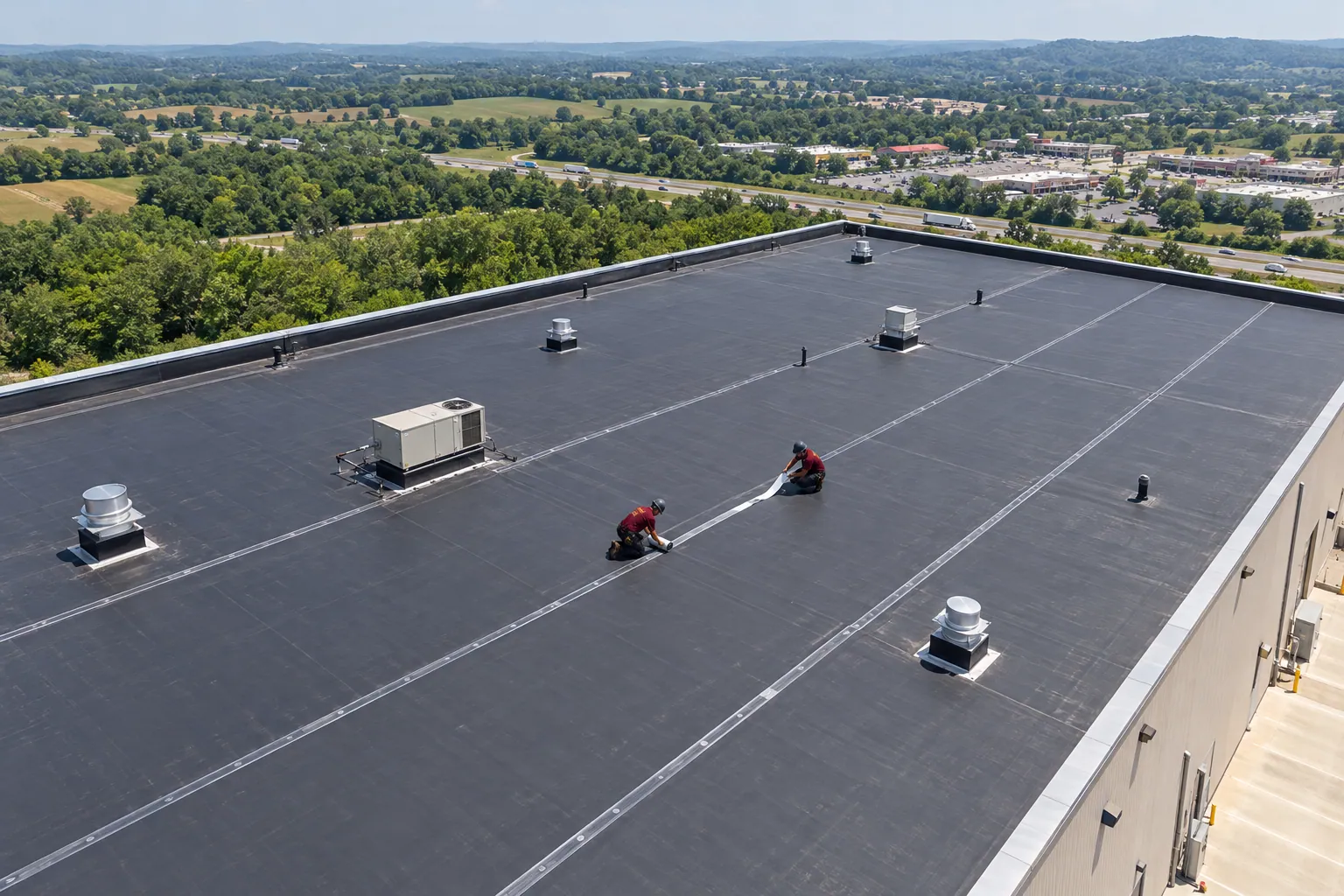
Welded white TPO suits cooled stores, with pre-formed curb wraps at each tenant's rooftop unit.
TPO roofing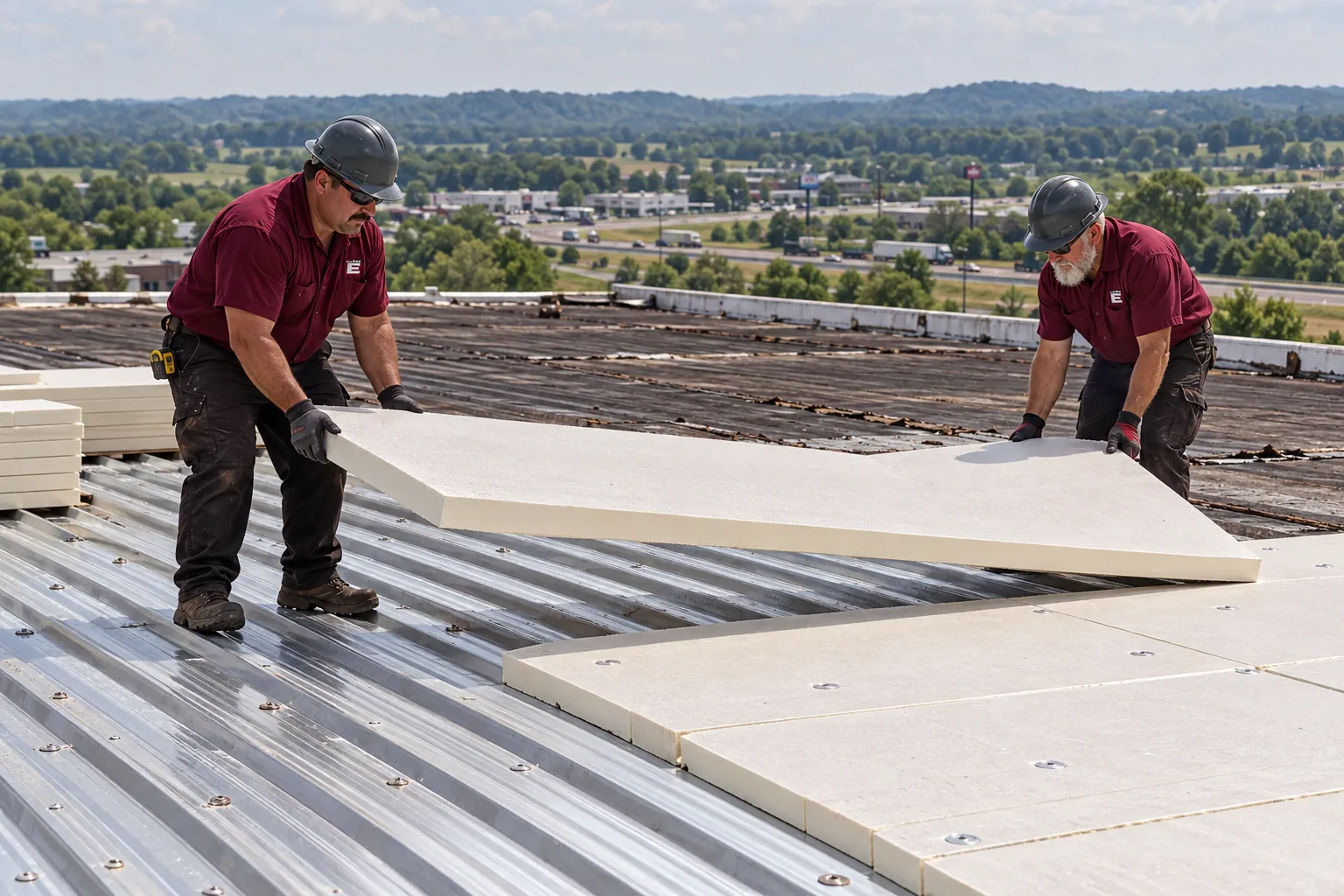
Recover or tear-off for the whole row, with tapered boards that move water to the back-wall scuppers.
Flat roofing
Leaks at coping joints, sign brackets, and curbs get traced and fixed between replacements.
Commercial roof repairCall and tell us which spaces have stains, and the roof walk covers every tenant above them.
Five steps take a storefront row from the first walk to a finished roof, with tenants kept informed.
We walk the whole row, checking coping on every shared wall, each tenant's curb, sign brackets, and the scuppers at the back, and look at the deck from inside each space we can reach.
Each space gets a section on the roof plan, so leaks, units, and repairs are tied to the right tenant and the right ceiling.
The scope goes to Grayson County's building inspector, with the address, roof area, existing layers, planned system, and insulation thickness.
Crews stage behind or beside the space being roofed, keep entrances clear, and close each section before leaving so the next shop stays dry.
You receive photos of each parapet, curb, and scupper by tenant space, ready for lease or insurance questions later.
Have a building outside Leitchfield? call us or send us a message. We also take commercial roofing work in Elizabethtown and these nearby towns.
Home base, with city plan review for reroofing.
Elizabethtown commercial roofingChurch and school roofs, LaRue County permits.
Hodgenville commercial roofingSeason-by-season scheduling, Hart County permits.
Munfordville commercial roofingHistoric district roofs, Nelson County permits.
Bardstown commercial roofingRooftop unit curbs, city building inspector.
Lebanon commercial roofingDrains and scuppers, city inspector review.
Springfield commercial roofingAnswers for owners and managers of retail roofs in Leitchfield.
Grayson County's local building inspector. The city's 2026 inspector list and the state's Grayson County sheet both point there and name no building inspector for the city itself. Grayson also has its own assigned state inspector, separate from the one for Hardin and LaRue, so an owner with buildings in both places works with two state contacts.
One storefront at a time. Crews tear off or prepare the section over one tenant, dry it in, and tie it to the old roof before moving on, so neighboring shops stay dry and open. Entrances, parking, and delivery doors are kept clear, and each tenant hears when work reaches their space.
Both faces of the wall get new flashing run up from the roof, and the top gets new coping with sealed joints sloped toward the roof. Where two tenants' roofs sit at different heights, the step between them gets its own flashing so water from the higher roof stays out from behind the lower one.
In most cases, yes. The work runs in sections over the spaces, crews keep walkways and doors clear, and noisy tear-off is scheduled around the busiest store hours. Rooftop units are shut down only over the section being worked, and every section is sealed before the crew leaves.
Have the street address and how the building is used, the roof area and number of existing layers, the planned system and insulation thickness, and any rooftop unit, drain, or gutter changes. For a storefront row, list each tenant space the work covers so the inspector sees the whole scope.
They should. Sign supports and conduit that pass through the roof are often sealed with cement, which cracks over time. During a reroof they get pitch pans or pre-formed pipe boots, or they are rerouted through the parapet where the sign owner agrees.
Start with one roof walk over every tenant space and a scope you can share with each of them.
Leave a name and number, or call (930) 201-3950 now.