Recover
A new roof over the one already there.
- Existing Layers
- One layer, dry and firmly attached
- Deck
- Stays covered during the work
- Debris
- Little to haul away
- Insulation
- New layer added over the old
- Roof Height
- Rises, so edges and curbs get checked

As an Elizabethtown flat roofing contractor, we replace and recover low-slope roofs, set tapered insulation for drainage, and rebuild the edges to the new height.
The first decision an Elizabethtown flat roofing contractor makes on an old roof is recover or tear-off, and these five points decide it.
A new roof over the one already there.
The old roof comes off down to the deck.
Low-slope roofs wear out in a familiar order, starting where water lingers and where the roof meets walls.
Nearly flat decks collect water between drains, along walls, and on the high side of curbs, which tapered boards and crickets correct.
Soft spots underfoot mean water has reached the insulation, and boards that stay wet under a new membrane keep feeding leaks.
Edge cleats and parapet coping loosen as the building moves, and a lifted edge is where wind starts peeling a flat roof back.
Two or more roofs stacked on the deck rule out another recover and hide deck rust that only shows once the layers come off.
Three paths cover most flat roof work, and the core cuts decide which one fits.
Tear-off to the deck, deck repairs, new insulation to code, tapered slope, and a new TPO or EPDM membrane with fresh edge metal and gutters.
Replacement detailsOne dry, attached layer can stay in place under a cover board and new membrane, which keeps the deck closed and cuts disposal.
EPDM recoversTapered insulation, crickets behind curbs, saddles between drains, and new or overflow scuppers fix ponding as part of either path.
Drainage on large roofsA rebuilt low-slope roof changes how water leaves the roof, what happens under it, and how the building meets code.
Tapered layouts push water to each drain or scupper so the field dries after a storm instead of holding ponds for days.
Coping, edge metal, and gutters are replaced to suit the thicker roof, so the perimeter is tight against wind.
A full replacement usually has to meet Kentucky's commercial energy code for roof insulation, so the new roof carries the thickness the building official checks.
Tear-off exposes rusted or rotted deck sections so they get repaired before new insulation covers them.
The moisture survey and core results go on a roof plan, which shows exactly what was removed and why.
Invoices separating roofing, insulation, and edge metal help your CPA decide how the replacement is treated.
Call and tell us where the ponds form and how long they last after rain, and the roof walk starts at the low spots.
Flat roof replacement follows these six steps, with every section closed before the crew leaves.
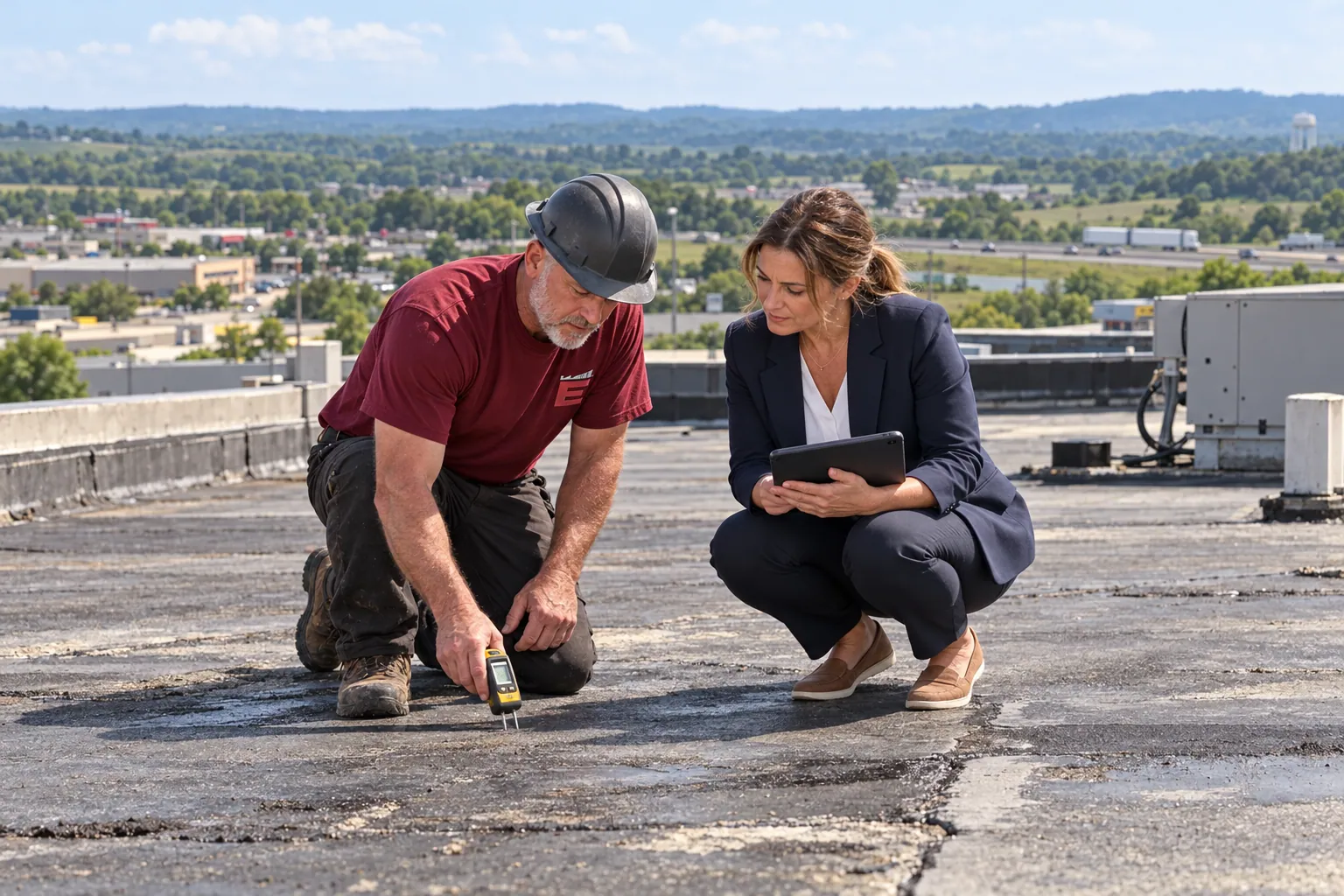
We walk the field, edges, curbs, and drains, note standing water lines, and check curb, door threshold, and wall flashing heights above the roof.
Infrared or moisture meter scans between core cuts mark the wet areas on a roof plan, separating sections to remove from areas that can stay.
Recover or tear-off is chosen from the survey, insulation thickness is set for the energy code, and the permit goes to the city or county office.
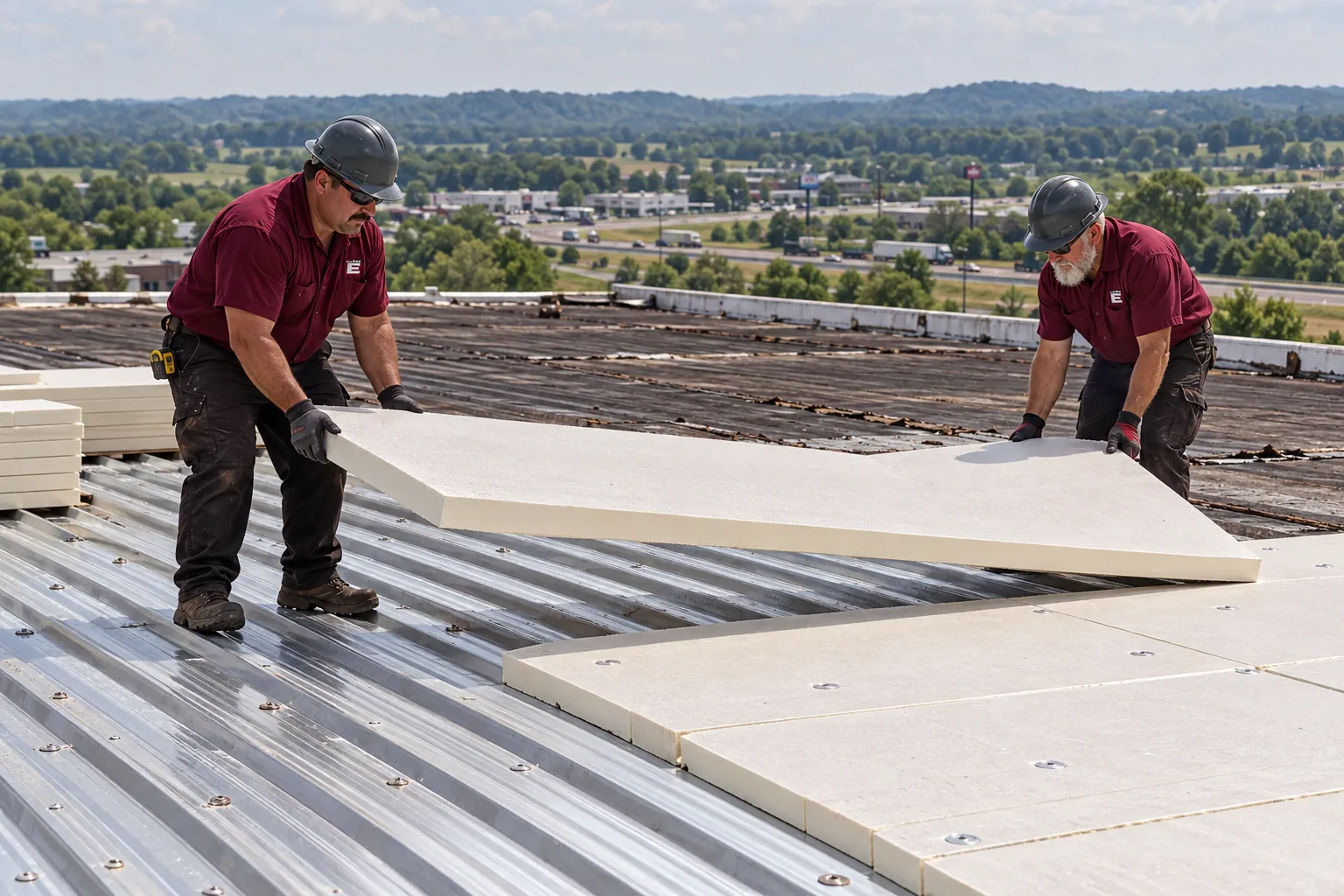
Old layers come off in sections, deck damage is repaired, and each opened area is dried in and tied to the old roof before the end of the day.
Base insulation, tapered boards, crickets, and a cover board go down, then the TPO or EPDM membrane with its welded or taped seams.
Drains get new clamping rings and extension rings, and edge metal, gutters, and coping are installed to the finished roof height.
The new membrane on a flat roof is one of these two.
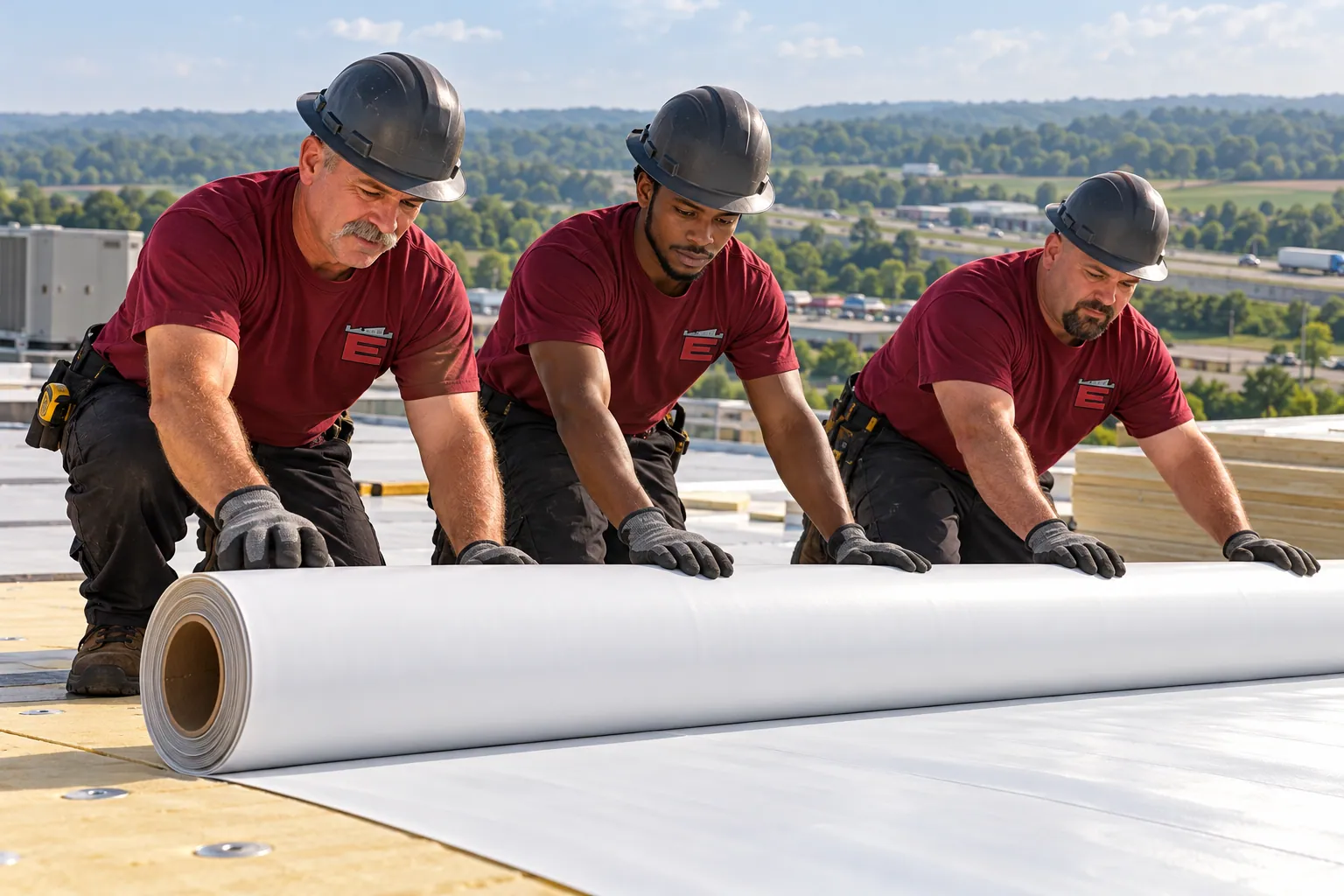
Cooled buildings usually finish a flat roof replacement with welded white TPO over the new insulation and cover board.
TPO roofing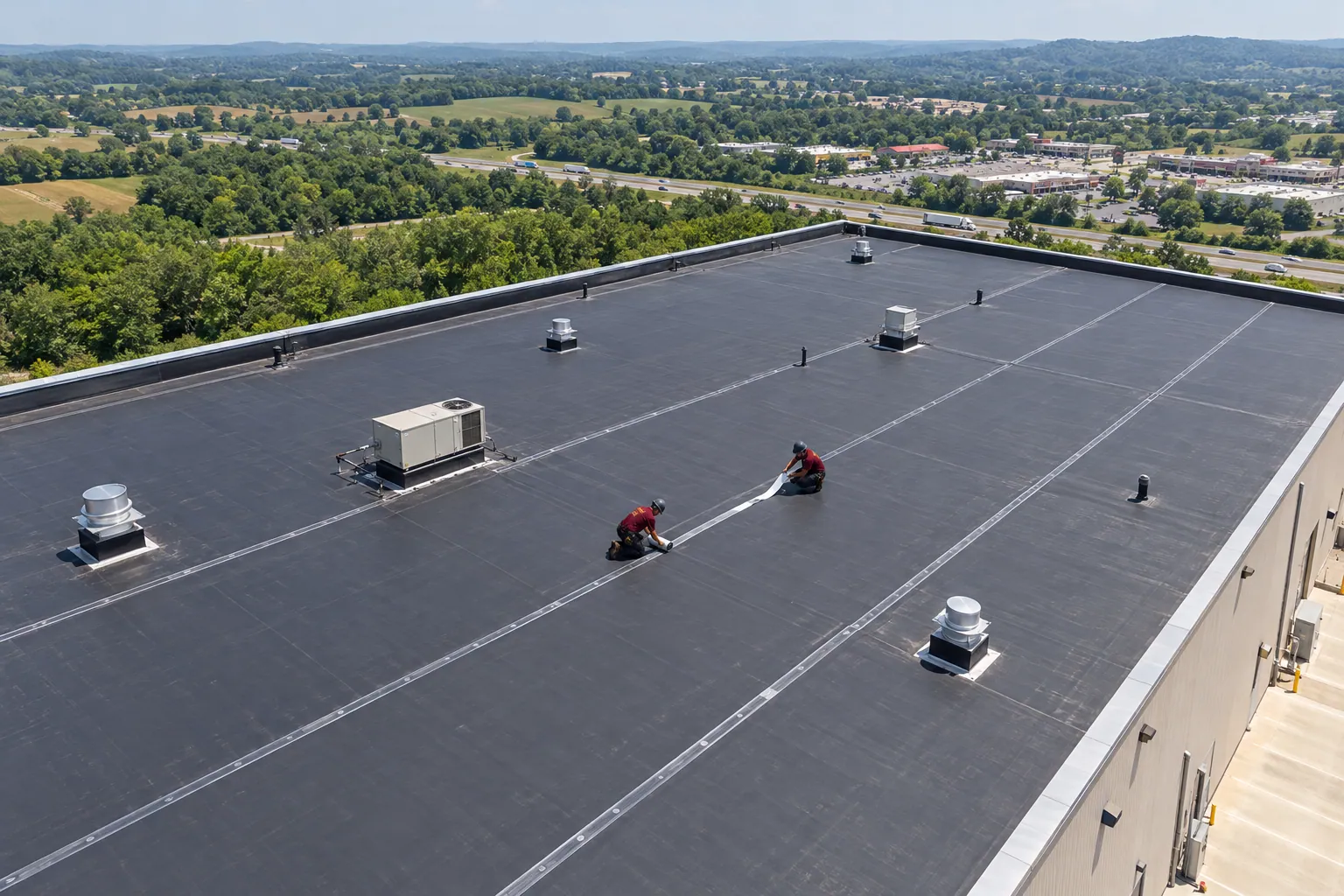
Heated storage and big, plain roofs often finish with wide EPDM sheets, taped seams, and cured flashing at the curbs.
EPDM roofingAnswers about ponding, recovers, and replacing low-slope roofs.
A roof walk and core cuts come first, then a moisture survey to mark wet areas. From there the old roof is either recovered or torn off in sections, deck damage is repaired, insulation goes down to code with tapered boards for drainage, and the new membrane and edge metal go on.
By changing the slope or the outlet. Tapered insulation adds built-in slope toward each drain, crickets push water off the high side of curbs, and saddles break up flat valleys between drains. Where the outlets are too few or set too high, new scuppers or lowered drain sumps let the water leave.
When there is one existing layer that is dry and firmly attached, yes. A cover board goes over the old roof and the new membrane on top. Wet insulation or two existing layers mean a tear-off instead, and the local building official makes the final call on a recover.
Retail strips carry many rooftop units, signs, and shared parapets between tenants, so the details matter as much as the field. Welded TPO with pre-formed curb wraps fits cooled stores well, and the work is staged one storefront at a time so each tenant stays open.
New insulation set to the energy code, plus tapered boards for drainage, adds thickness. That raises the finished roof against curbs, walls, and door thresholds, so curbs are raised, wall flashing is replaced, and edge metal and gutters are reset to the new height.
Roofs with wet insulation over large areas, two or more existing layers, or a deck that shows rust or rot from inside. Tearing off lets the deck be inspected and repaired, and it resets the edge heights so the new insulation fits under the flashing.
The walk starts where water stands, the cores come next, and you see the survey before any path is chosen.
Leave a name and number, or call (930) 201-3950 now.